The Death of Europe
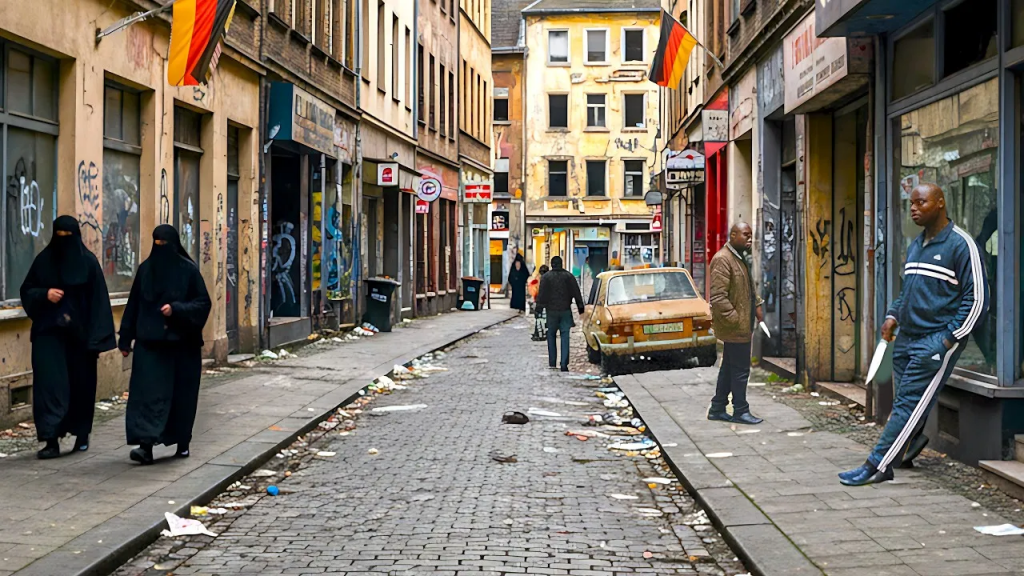
| Hans Vogel Jan 02, 2026 Seen through the eyes of a naive observer, “Democracy” in Europe is alive and kicking. Regular elections at the local, regional and national levels are being held, there are dozens of political parties and there is a “left” and a “right.” There are debates in national and regional parliaments and in City Councils. There are debates in the European Parliament in Brussels, and these sometimes seem heated and the issues important and authentic. But wait, you might have noticed that in some parliaments the chairman has prohibited the use of certain terms and words. In the Dutch Parliament the word “omvolking” (population replacement) is strictly forbidden. Use of the term may lead to an MP’s suspension. Yet what has been going on in Europe since the mid-1970s is precisely that: population replacement. Since government control in Europe has become much stricter over the years, it is obvious that few things happen in Europe without the state knowing about it. On the contrary, most things happen because the state wants it. |
Europe Towards an Uncertain Future
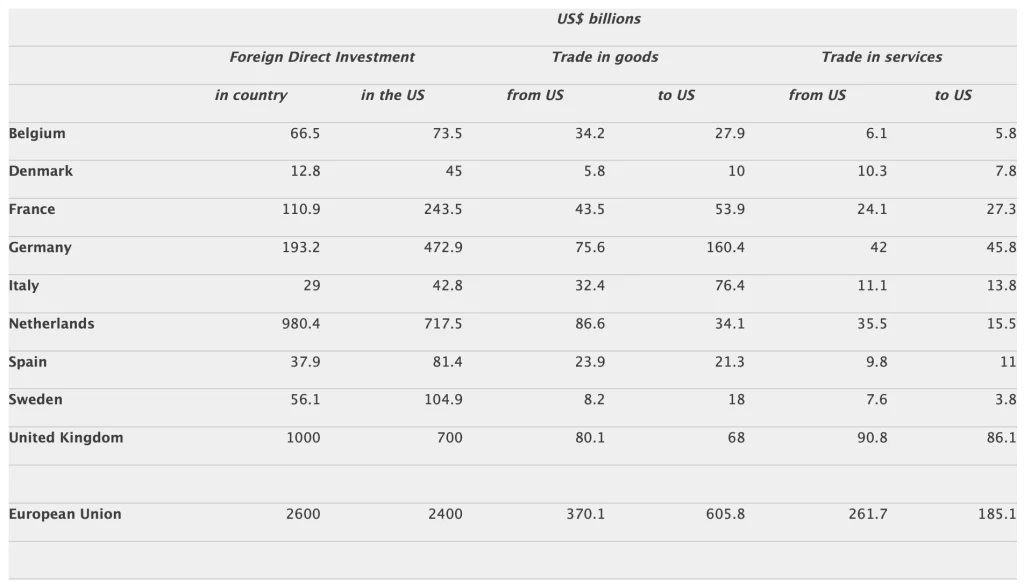
| By Stephen Sefton Global Research, January 26, 2026 A sequel to the catastrophe of the Second World War from which Europe has never recovered is its political-military and economic dependence on the United States of North America. This dependence originated with the creation of the World Bank and the International Monetary Fund in 1944, the implementation of the Marshall Plan of economic aid which started in 1948 and the foundation in 1949 of the military alliance, the North Atlantic Treaty Organization. It is generally forgotten that the Marshall Plan, under the U.S. Foreign Operations Administration agency, continued in effect until 1961. That period and its aftermath have determined the development of Europe up to the present. The Economic Relationship with the USA From 1950 until the end of the Cold War in 1990 about 300,000 US troops occupied bases throughout Western Europe. Today, there are only 80,000 US military personnel left in Europe, but the financial and commercial dependence and interrelationship are still very much in force. This reality can be seen in the figures of the enormous mutual direct investment and the exchange of goods and services between the US economy and the main European countries. Especially noteworthy are the relations between the US economy and the economies of France, Germany, the Netherlands and the United Kingdom. |
The Railway China Built in Europe That EU Couldn’t Stop
| The Belgrade–Budapest Railway became one of Europe’s most controversial infrastructure projects. Here’s how China built it, why the EU tried to slow it down, and what it means for Europe’s future transport routes. |
Europe Sabotaging Trump’s Ukraine Peace Deal – Like Boris Johnson Did in 2022
| By Uriel Araujo Global Research, November 27, 2025 As Kyiv is signalling it might agree to a peace deal (with only “minor details” to be sorted out), one might have hoped for a fresh start in resolving the protracted Ukraine conflict. Instead, Europe is once again playing the role of spoiler. The 28-point peace plan advanced by the US and now under active negotiation, in fact offers a pragmatic path to de-escalation — one that balances security concerns on both sides while funneling resources toward reconstruction. Yet key European leaders are already working to undermine it, pushing unattainable goals that risk protracting the conflict. This isn’t just shortsighted; it’s a blatant repeat of past blunders that have prolonged the crisis. The plan has real merits, even if it’s far from perfect. As Mark Episkopo and Marcus Stanley (both Quincy Institute for Responsible Statecraft scholars) point out, at its core, it envisions a Ukrainian army capped at 600,000 troops — a size analysts agree Kyiv can realistically sustain without collapsing under economic strain. This is more than double what Ukraine sought in early 2022 talks and nearly eight times Russia’s initial demand. On the thorniest issue of territory, the proposal calls for Ukraine to withdraw from just 1% of its 1991 borders: unconquered areas in Donetsk oblast. Crucially, this sliver would become a demilitarized zone, not Moscow-occupied land, leaving Kyiv in control of about 80% of its pre-2014 territory. |
Trumps Strafzoelle


Antisemitismus-Resolution: Maulkorb für die Wissenschaft

kritisch ✓ meinungsstark ✓ informativ Telepolis hinterfragt die digitale Gesellschaft und ihre Entwicklung in Politik Wirtschaft Medien| 06. Februar 2025 Luca Schäfer Neue Resolution gegen Antisemitismus an Schulen und Unis. Zustimmung von SPD bis AfD. Die Folgen für die akademische Freiheit könnten dramatisch sein. Sie haben es wieder getan: Nach einer allgemeinen Resolution und entsprechenden Maßnahmen gegen Antisemitismus in Deutschland im November 2024 wurde am 30. Januar mit den Stimmen eines breiten rechten Bürgerblocks eine bildungsspezifische Resolution verabschiedet. Die zuvor in Pro- und Contra-Merz gespaltene Allparteienkoalition schien sich in diesem Punkt einig: Von SPD bis AfD gab es Zustimmung, nur das BSW stimmte dagegen. |

Bei der Resolution ging es weniger um Antisemitismus als um die Delegitimierung von Kritik an IsraelThe NATO Bombing of Yugoslavia was a Criminal Act, Western Media Were Accomplices, Covering Up the Crimes of NATO and the KLA. Michel Chossudovsky
| By Prof Michel Chossudovsky Global Research, March 25, 2025 Borba 23 March 2025 Michel Chossudovsky, professor of economics from the University of Ottawa and founder of the Centre for Research on Globalization, said on the occasion of the 26th anniversary of the beginning of the NATO aggression against FR Yugoslavia that it was the first official NATO war against a sovereign country, but not the last, because that war agenda was later used in various wars, and in which media propaganda played a big role, which shows its face even today when it comes to Ukraine. |