chile Venezuela colombia honduras puertorico bolivia Cuba Peru Panama
Trump’s Political Terrorism and the “Counter-Cartel Campaign” in Latin America: Echoes Its “Counter-Terrorism” Legacy
| By Miguel Santos García Global Research, March 27, 2026 The “Global War on Terror” was characterized by open-ended commitments, the erosion of civil liberties in partner nations, and the destabilization of entire regions under the banner of security. The early events, Maduro’s arrest on narco-terrorism charges, the Cuba designation as terrorist and cartel kingpin, unaccounted extra judicial killings at sea, are consistent with the GWoT‘s opening phase. As the US pivots to a “Hemispheric War on Cartels,” via “Operation Total Extermination” whose blueprint are outlined in an official document which suggests that Latin America is set to inherit the same neocolonial legacy of permanent military presence and strategic, economic subordination that defined the last two decades in the Middle The Department of War’s (DoW) 2026 posture statement, delivered by Acting Assistant Secretary Joseph M. Humire, outlines a fundamental restructuring of US defense priorities centered on the “American homeland and hemisphere first.” While framed as a defensive strategy to counter narco-terrorism and seal borders, an analysis of the operational methods, strategic language, and geopolitical objectives reveals a blueprint for sustained, intrusive intervention across Latin America and the Caribbean. By explicitly applying the lexicon and legal frameworks of the Global War on Terror, pretty much like “kinetic strikes,” “designated terrorist organizations,” and “coalition of the willing”, to cartels and hemispheric adversaries, the United States is establishing a precedent for extra-jurisdictional military action and overlordship. If this counter-cartel strategy follows the trajectory of the counter-terrorism legacy, it will result in a neocolonial design characterized by permanent military access, sovereignty erosion for partner and targeted nations, and the subordination of regional stability to US strategic and economic dominance via a Washington Consensus all the while the cartels will thrive like ISIS has done thanks to the US. Thus, as the US counter-cartel campaign mirrors the US counter-terrorist legacy, we can expect a neocolonial design on the region for carving a Unipolar sphere of influence in the western hemisphere. |
U.S. Envoy Laura Dogu to Caracas: Washington’s Regime Change Playbook: Nicaragua, Honduras, Venezuela
| By Roger D. Harris and John Perry Global Research, February 13, 2026 Laura Dogu, newly appointed US envoy to Venezuela, is described by the Los Angeles Times as an appropriate choice because she “navigated crises” in Nicaragua and Honduras during periods of “social and political volatility.” What the LA Times fails to add is that it was precisely Dogu’s job to create crisis and volatility in both countries. In Latin America she is widely regarded, for good reason, as the “US ambassador of interventions and coups.” The LA Times appears entirely relaxed about a US diplomat’s job being to meddle in the internal politics of a country whose president the US has just kidnapped in an operation resulting in the murder over 100 people and involving the bombing of key public buildings and health facilities. Dogu enters the fray “leveraging her experience with authoritarian regimes” and her “deep Latin American expertise.” The LA Times implies that her job is likely to be proactive, looking for ways to ease out the Chavista government and replace it with one more to Washington’s liking, even if that takes a while. . |
chile
The far right came to power in Chile due to the failure of what was supposed to be the most left-wing government since Allende, claims Daniel Jadue

In an exclusive interview, the leader comments on the crisis of Latin American leftists ‚colonized by neoliberalism‘.

Republished with permission
| Think BRICS Mar 20, 2026 On the 11th, Jose Antonio Kast, a far-right politician and supporter of Pinochet, took office as President of Chile, succeeding Gabriel Boric (2022–2026). Known as the “Chilean Bolsonaro,” Kast defeated the left-wing candidate, Jeannette Jara, bringing extremism back to the country’s government after 35 years. For Daniel Jadue, a member of the Communist Party of Chile and former mayor of the Recoleta district—the equivalent of a borough in Greater Santiago—the population “has grown tired of the lukewarm left, of left-wing movements colonized by neoliberalism” and is seeking alternatives to alleviate its suffering. In an exclusive interview with Brasil de Fato, Jadue highlighted the failure of the Boric government and the return of the far right to power in Chile, analyzing the crisis facing Latin American left-wing movements, “colonized by neoliberalism,” and some of the challenges they face in the coming period. He also commented on his legal proceedings and his prospects for a return to political activism. |
Venezuela
Hands Off Venezuela: Historic Stance at the United Nations against US Imperialism
| By Carla Stea Michel Chossudovsky Apr 07, 2026 In a spectacular display of solidarity and strength, envoys from such distant capitals as Beijing and Havana, Moscow and Tehran, Pyongyang and Caracas, Damascus and Managua and numerous other states stood together, side by side, in front of the United Nations Security Council, declaring their determination to protect the UN Charter and International Law, and holding sacrosanct the sovereignty and inviolability of each member state. All these present, and approximately 50 more aligned, are states whose combined populations comprise more than half of the people of the world, and all have been victimized and pauperized by the predations of neoliberal capitalist states bleeding the wealth of their peoples. |
Betrayal in Caracas? Treason?
| By Timothy Alexander Guzman Global Research, March 20, 2026There was no resistance, no major shots or rockets fired to repel US MH-60M Black Hawks and MH-47G Chinooks that went in to Caracas in the middle of the night to kidnap Venezuela’s elected President, Nicolas Maduro which did kill more than 100 people including 32 Cuban soldiers and security personnel. The US plan under Operation Absolute Resolve was based on those who decided to become traitors to their own country to appease a hungry empire including the possibility that Maduro’s Vice-President, Delcy Rodriquez as being a direct collaborator with Washington according to various reports. The Guardian, a UK-based mainstream media outlet claimed that Rodriquez was in secret talks before the operation took place with the Trump Regime and the Monarchy of the Persian Gulf state of Qatar: Before the US military snatched Venezuela’s president, Nicolás Maduro, earlier this month, Delcy Rodríguez and her powerful brother pledged to cooperate with the Trump administration once the strongman was gone, four sources involved at high levels with the discussions told the Guardian. Rodríguez, who was sworn in on 5 January as acting president to replace Maduro, and her brother Jorge, the head of the national assembly, secretly assured US and Qatari officials through intermediaries ahead of time that they would welcome Maduro’s departure, according to the sources. The communications between US officials from Delcy Rodríguez, who was then Maduro’s vice-president, began in the fall and continued after Trump and Maduro spoke in a crucial phone call in late November, the Guardian has learned, in which Trump insisted that Maduro leave Venezuela. Maduro rejected the demand |
“The First Victim Was the Truth” – The Cognitive War on Venezuela
| Leonardo Flores, CODEPINK CODEPINK Mar 10, 2026 Two days before his kidnapping, President Nicolás Maduro gave an interview to Spanish writer Ignacio Ramonet and explained that the war on Venezuela is a cognitive one, “because the war is for the brain, the brain handles emotions and handles concepts.” The term cognitive war is relatively new, and it sheds light on recent discourse around Venezuela.One of NATO’s definitions characterizes cognitive war as unconventional warfare used to “alter enemy cognitive processes, exploit mental biases or reflexive thinking, and provoke thought distortions, influence decision-making and hinder actions, with negative effects, both at the individual and collective levels.” It goes beyond propaganda or psychological warfare. Another NATO source says it “is not the means by which we fight; it is the fight itself. The brain is both the target and the weapon in the fight for cognitive superiority.” Maduro understood this, saying that “to counteract a cognitive war, you have to create a force of conscience, a force of values, a spiritual force and fight with the truth. Our greatest weapon is not a nuclear rocket, our greatest weapon is the truth of Venezuela.” |
A Venezuelan-Like Oil Blockade Against Iran. Would It Enable the US to “Divide-and-Rule”?

| By Andrew Korybko Global Research, February 16, 2026 The Wall Street Journal reported that Trump 2.0 is considering imposing a Venezuelan-like oil blockade against Iran. It hasn’t yet done so due to concerns that Iran might attack the US’ regional military assets and/or seize its Gulf allies’ oil tankers, with either scenario destabilizing the global oil market and spiking the risk of war, so it might never ultimately happen. If the US were to successfully impose such a blockade, however, then it might be able to adroitly divide-and-rule Russia, India, and China (RIC). |
Trump declares Venezuela „liberated“ now that it is sending oil to Israel

| Normal Island News Feb 11, 2026 President Trump has announced that Venezuela has been “liberated” now that it is sending oil to Israel. The president, who needed a distraction from the 960,000 redactions of his name in the Epstein files, said: “This is a great day for Venezuela’s oil which gets to experience human rights for the first time in decades.” |
Der Gangsterbericht: Die William-Barr-Doktrin, Noriega und Maduro
| Dr. Binoy Kampmark Global Research, 27. Januar 2026 US- Präsident Donald Trump mag den Eindruck gewalttätiger Neuerungen erwecken, zumindest für den Anführer einer nominell liberalen Demokratie, und die internationalen Beziehungen mit einem Hauch von Gangster-Attitüde beschmutzen. Dieses Gefühl des Ikonoklasmus ist jedoch fehl am Platz. Zwar verstößt sein Vorgehen bei der Entführung von Nicolás Maduro eklatant gegen die Grundsätze des Völkerrechts, doch haben Rechtsberater der US-Regierung über Jahrzehnte hinweg mit einer Mischung aus Verschlagenheit und Unaufrichtigkeit genau dafür die Rechtfertigung entwickelt. Gleiches gilt für die Rechtfertigungen für Folter, die die Regierung von George W. Bush für immer überschatten werden, und für Theorien, die das Präsidentenamt über die Kontrolle von Kongress und Gerichten erheben. Während seiner Amtszeit als stellvertretender Generalstaatsanwalt zwischen 1989 und 1990, als er das Rechtsberatungsbüro des Justizministeriums leitete, verfasste William J. Barr , der später zweimal als Generalstaatsanwalt tätig war, geheime Memoranden, die einer Art Doktrin gleichkamen – und zwar einer ziemlich unschönen. Die Doktrin , die die Entführung des unbequemen Generals Manuel Noriega und die US-Invasion in Panama 1989 legitimierte, ist zutiefst undemokratisch und steht eher im Einklang mit den blutigen Traditionen der NS-Rechtsprechung als mit den aufgeklärten Schriften Thomas Paines. Doch ihr Produkt ist auch grundlegend für die Ausübung imperialer Macht, die mit zunehmender Machtausübung immer unkontrollierter und unberechenbarer wird. Als die USA aufhörten, eine kleine, überschaubare Republik nach Montesquieus Idealstaat zu sein und ihre Grenzen durch Käufe, Enteignungen und Eroberungen erweiterten, führte die Machtzentralisierung zu Machtgier und Rebellion in der Exekutive. Dies gipfelte in dem, was Arthur M. Schlesinger Jr. 1973 als „Imperiale Präsidentschaft“ bezeichnete – ein Herrschaftssystem, das den Konstitutionalismus verachtet, indem es „ein so weitreichendes und unumschränktes Verständnis von Präsidentschaftsmacht“ vertritt, dass es eine radikale Transformation des traditionellen Staatswesens impliziert. |
US seizes oil tanker off Venezuela as Caracas condemns ‚act of piracy‘
US intervention in Venezuela and self-inflicted blow of Monroe Doctrine 2.0

In reviving the Monroe Doctrine, the US risks forging its own chains in a world no longer tolerant of a unilateral empire.

| Dr Warwick Powell Jan 12, 2026 Editor’s note: Warwick Powell is an Adjunct Professor at Queensland University of Technology. He’s also working at the intersection of China, digital technologies, supply chains, financial flows and global political economy & governance. The article reflects the author’s opinions and not necessarily the views of China Up Close. The dawn of January 3, 2026 marked a dramatic escalation in US foreign policy when American special forces, backed by airstrikes involving over 150 aircraft, raided Caracas and seized Venezuelan President Nicolás Maduro and his wife Cilia Flores. The US pledges to „run“ Venezuela until a „safe, proper and judicious transition“ has been achieved. This operation, dubbed „Operation Absolute Resolve,“ echoes centuries of US imperial interventions in Latin America, reviving the Monroe Doctrine in a modern guise dubbed the „Donroe Doctrine.“ Yet, as history demonstrates, such actions often become a „rod for America’s own back“ – a self-inflicted burden of instability, resentment and strategic overreach that undermines US interests far more than it secures them. |
Maduro will get a show trial

Justice can exist, but not judicial independence

Joe Emersberger Jan 11, 2026 In a civilized world, the U.S. would not get away with war crimes that killed 100 people (combatants and civilians combined) to kidnap Venezuelan President Nicolas Maduro and his wife. The U.S. dictatorship would face being overthrown by foreign armies (with UN authorization) if it did not return Maduro and his wife to Venezuela, and pay massive reparations to all the victims’ families in Caracas. In this fantasy scenario the U.S. would never have dared to perpetrate this crime in the first place, or imposed murderous illegal sanctions (more recently an armed blockade) on Venezuela. |
Maduro: Ein Diktator?

| Marc Vandepitte Global Research, 8. Januar 202 Is Nicolás Maduro a ruthless dictator or the guardian of a besieged fortress? In a country torn apart by sanctions and “electoral warfare,” reality is more complex than Western headlines would have us believe. * Nicolás Maduro Moros (1962) comes from a working-class family and was shaped by the trade-union movement. He worked as a bus driver for the Caracas metro system and grew into a prominent union activist. Within the Chavista project led by President Hugo Chávez, he built a career as a Member of Parliament, Minister of Foreign Affairs (2006–2012), and, from October 2012, Vice President. When a dying Chávez appointed him as his successor in December 2012, he did so with a clear message: Maduro was the man who could safeguard the unity of the PSUV (United Socialist Party of Venezuela) and preserve the country’s social gains. Diese einseitigen Zwangsmaßnahmen, die lebenswichtige Öleinnahmen blockierten, hatten das erklärte Ziel, die venezolanische Wirtschaft zu zerstören und die Bevölkerung zum Aufstand zu zwingen. Laut einem CEPR-Bericht [1], zu dem Jeffrey Sachs beigetragen hat, verursachten die Wirtschaftssanktionen in den Jahren 2017–2018 rund 40.000 zusätzliche Todesfälle in Venezuela. Infolge des wirtschaftlichen Notstands und der internen Polarisierung verließen mehr als sieben Millionen Venezolaner das Land. Dies führte zu einer enormen Abwanderung hochqualifizierter Fachkräfte, die die Wirtschaft zusätzlich schwächte. Maduro sah sich nicht nur wirtschaftlichem Widerstand gegenüber. Während seiner Herrschaft sah sich Venezuela mit von den USA unterstützten Putschversuchen konfrontiert, wie der gescheiterten „Operation Gideon“[2], und der Schattenregierung von Juan Guaidó [3], die von Washington massiv unterstützt wurde. |

Warum Venezuelas Militär nicht gekämpft hat
| Miguel Santos García Global Research, 4. Januar 2026 US- Präsident Donald Trump erklärte in einer Pressekonferenz , die USA würden Venezuela nun regieren. Damit erweckte er den Eindruck, die neue Präsidentin Venezuelas, Delcy Rodríguez , die bis zu Maduros‘ Entführung Vizepräsidentin war, werde den Anweisungen der USA Folge leisten. Stunden nach Trumps Pressekonferenz wandte sich Rodríguez in einer Fernsehansprache an die südamerikanische Nation und machte deutlich, dass sie die Vereinigten Staaten als illegalen Eindringling betrachte, der zurückgeschlagen werden müsse. Ihr Widerstand gegen Trump verdeutlichte, dass Trumps Pläne, Venezuela als US-Beute zu besetzen und zu regieren , auf weitaus größere Hindernisse stoßen werden, als er in seiner Pressekonferenz am Samstag, in der er den Sieg in Venezuela verkündete, suggeriert hatte. |

| President Donald Trump said the US would run Venezuela until a transition could be organized, hours after a US operation captured leader Nicolás Maduro, ousting the strongman from power after months of mounting military and economic pressure on his regime. “We’re going to run the country until such time as we can do a safe, proper and judicious transition,” Trump said Saturday at a press conference at his Mar-a-Lago estate in Florida. “So we don’t want to be involved with having somebody else get in, and we have the same situation that we had for the last long period of years.” Trump said the US administration of Venezuela would include deploying US oil companies to the country, though indicated that his embargo “on all Venezuelan oil remains in full effect” and that US forces would stay on alert. “We’re going to have our very large United States oil companies, the biggest anywhere in the world, go in, spend billions of dollars, fix the badly broken infrastructure, the oil infrastructure, and start making money for the country,” Trump said. But the president offered few other details on how he planned to administer the country, saying it would be done “with a group” largely comprised of senior US officials and with an emphasis on repairing oil infrastructure and making sure the people of Venezuela were “also taken care of.” Secretary of State Marco Rubio had been in recent contact with Venezuelan Vice President Delcy Rodriguez, the US president said, adding he expected her cooperation going forward. “She had a long conversation with Marco, and she said, ‘We’ll do whatever you need,’” Trump said. “I think she was quite gracious, but she really doesn’t have a choice.” Asked if US boots would be on the ground, Trump said he was “not afraid” of the idea to make sure the country was run properly. |
| Venezuela Kommentar von GaborSteingart |
Who’s Really Running Venezuela?

| CODEPINK and Medea Benjamin Jan 09, 2026 Medea Benjamin and Nicolas J. S. Davies As the Senate voted to advance a War Powers Resolution on Venezuela on January 8th, Republican Senator Susan Collins declared that she did not agree with “a sustained engagement “running” Venezuela.” The world was mystified when President Trump first said that the United States would “run” Venezuela. He has since made it clear that he wants to control Venezuela by imposing a U.S. monopoly on selling its oil to the rest of the world, to trap the Venezuelan government in a subservient relationship with the United States. |
Abduction in Caracas


| Tariq Ali Jan 09, 2026 Two decades before US forces kidnapped Venezuelan president Nicolás Maduro this weekend, Hugo Chávez had already predicted the approach: Years ago, someone told me: “They’re going to end up accusing you of being a drug trafficker—you personally—you, Chávez. Not just that the government supports it, or permits it—no, no, no. They’re going to try to apply the Noriega formula to you.” They’re looking for a way to associate Chávez directly with drug trafficking. And then, anything goes against a ‘drug trafficker president’, right? |
Maduro pleads not guilty in U.S. court
| Drop Site Daily: January 6th, 2026 Venezuelan President Nicolás Maduro pleads not guilty in his U.S. trial and says he remains the president of Venezuela. Delcy Rodríguez is sworn in as Venezuela’s interim president. Reports of gunshots and unidentified drones near the Venezuelan presidential palace Monday night. Interior Minister Diosdado Cabello calls for a nationwide mobilization, as Venezuelans stream into Caracas to show their support for Maduro. DOJ drops charges alleging that Maduro was the leader of the “Cartel de los Soles |
Donroe Doctrine: Trump attack on Venezuela is part of imperial plan to impose US hegemony in Latin America

Donald Trump’s bombing of Venezuela and abduction of President Maduro is part of colonial plan to impose US hegemony in Latin America, control natural resources, make new supply chain to cut out China

| Ben Norton Jan 05, 2026 The United States has launched a full-frontal attack not only against Venezuela, but against all of Latin America — and even against the basic concept of sovereignty. Donald Trump ordered the US military on January 3 to bomb Venezuela, to kidnap its constitutional President Nicolás Maduro, and to send him to New York to be subjected to a show trial on politically motivated charges. By attacking Venezuela, the US empire hopes to accomplish several goals: Impose US hegemony in Latin America (from the Monroe Doctrine to the Donroe Doctrine). Exploit Venezuela’s natural resources (oil, gas, critical minerals, and rare earth elements), as part of an attempt to build a new supply chain in the western hemisphere. Cut off Latin America’s ties with China (as well as with Russia and Iran). Threaten other left-wing governments in the region (primarily Cuba and Nicaragua, but also Brazil and Colombia). Destroy the project of regional integration in Latin America and the Caribbean (in organizations like the ALBA and CELAC). Sabotage Global South unity (given Venezuela’s support for Palestine, Iran, African liberation struggles, etc.). |
Anti-imperialist Nexus Jan 06, 2026

Even supporters of the Venezuelan opposition are demanding Maduro’s release
| While despicable “journalists” in the corporate media are justifying the abduction of Maduro and pretending invasion is liberation, supporters of the Venezuelan opposition are joining pro-Maduro protesters on the street. The reason is simple: they know the US is trying to take over their country and if it succeeds, Venezuela is lost forever. We were told that Maduro is hugely unpopular, but we did not see waves of Venezuelans come out to celebrate his abduction—they came out to demand his release (remember, they did the same back in 2002 for Hugo Chavez and they got their way). |


Venezuela and the Petrodollar: Why the US Dollar System Depends on Military Intervention
Venezuela’s 303B barrels threaten the petrodollar. From Kissinger’s 1974 Saudi deal to today’s intervention, this analysis connects dollar survival to regime change across Iraq, Libya, Venezuela.

| Think BRICS Jan 07, 2026 The Petrodollar Crisis Behind the Invasion The real reason the US is invading Venezuela goes back to a deal Henry Kissinger made with Saudi Arabia in 1974. And I’m going to explain why this is actually about the SURVIVAL of the US dollar itself. Not drugs. Not terrorism. Not “democracy.” This is about the petrodollar system that has kept America the dominant economic power for 50 years. And Venezuela just threatened to end it. Here’s what really just happened: Venezuela has 303 billion barrels of proven oil reserves. The largest on Earth. More than Saudi Arabia. 20% of the entire world’s oil. But here’s the part that matters: Venezuela was actively selling that oil in Chinese yuan. Not dollars. In 2018, Venezuela announced it would “free itself from the dollar.” They started accepting yuan, euros, rubles, anything BUT dollars for oil. They were petitioning to join BRICS. They were building direct payment channels with China that bypass SWIFT entirely. And they were sitting on enough oil to fund de-dollarization for decades. |
The US raid on Venezuela is aimed at paving the way for a next strike against Iran.
2026 begins with a shock: the U.S. raids Venezuela to seize oil, securing a strategic reserve before a planned strike on Iran to destroy BRICS and block China’s Belt and Road Initiative.

| Think BRICS and Xiaoguang Yin Jan 05, 2026 2026 began turbulently. On January 3, the United States launched a surprise attack on Venezuela, striking multiple Venezuelan military bases. Simultaneously, the U.S. dispatched elite Delta Force special forces to raid the Venezuelan presidential palace, capturing President Maduro and his wife. The United States’ rogue actions against Venezuela have shocked the world and drawn strong condemnation from many countries, including Russia and China, which have issued strongly worded statements. Why did the United States suddenly launch a surprise attack on Venezuela? This matter probably has to start with Iran on the other side of the world. Since December 2025, the United States and Israel have comprehensively escalated their multidimensional pressure campaign against Iran, launching a full-scale attack on Iran in economic, military, and political spheres. |
Venezuela: Perimeter of the Emerging Multipolar World and the Anatomy of Regime Change
Maduro’s fall reveals regime change’s brutal gears: CIA links, drug cartels, Israeli cheers, Monroe Doctrine 2.0; Venezuela as the dying empire’s sacrificial edge.

| Think BRICS and Lorenzo Maria Pacini Jan 06, 2026 In the roster of bitter enemies of the old world, the collective West, Venezuela has always occupied a privileged position. Why is this so? The answer is simple: Venezuela represents a bulwark of resistance to Western imperialism, both European and American, it represents a concrete barrier to nationalisms of all typologies (neofascism and neonazism, but not only these), it represents an experiment in practical socialism. Nothing of all this can be pleasing to those who, instead, plan at the drawing board the forms of political power maneuvered by the hegemonic octopus. The socialism of the Bolivarian Revolution has represented one of the most significant attempts, in the twenty-first century, to rethink the relationship between State, people, and resources in Latin America. Born from the historical experience of social exclusion, economic dependence, and oligarchic concentration of wealth, the Bolivarian project has sought to restore centrality to the Venezuelan popular masses, placing at the center of politics social justice, national sovereignty, and inclusion. |
How the US attack on Venezuela, abduction of Maduro unfolded


| After months of planning, US forces, with 150 jets taking off from 20 airbases, took on an operation to abduct Maduro.In a move that stunned the world, the United States bombed Venezuela and abducted President Nicolas Maduro amid condemnation and plaudits. In a news conference on Saturday at his Mar-a-Lago resort in Florida, US President Donald Trump praised the operation to seize Maduro as one of the “most stunning, effective and powerful displays of American military might and competence in American history”. Recommended Stories list 1 of 4Venezuela temporarily closes border with Brazil following US strike list 2 of 4Fact-checking Trump following US ‘capture’ of Venezuela’s Maduro list 3 of 4Trump says US will take Venezuela’s oil list 4 of 4US Republicans back Trump on Venezuela amid faint MAGA dissent |
U.S. Attacks and the Abduction of Venezuelan President Nicolás Maduro

| U.S. abducts Nicolás Maduro: The U.S. carried out an overnight bombing campaign in Caracas and several Venezuelan states on Friday night into Saturday morning, before officials announced the abduction of Venezuelan President Nicolás Maduro and his wife Cilia Flores. A report on the operation from the head of Drop Site’s Latin America Desk José Luis Granados Ceja is available here. U.S. attacks on Venezuela result in a minimum of 80 casualties, including civilians: At least 80 people, including civilians, Cuban nationals, and members of the Venezuelan military were killed in the U.S. operation that kidnapped Maduro, a senior Venezuelan official told The New York Times. Trump announces Maduro’s capture Friday night; Maduro lands in the U.S. on Saturday, with a court appearance Monday: President Donald Trump announced Friday that the United States “captured” Venezuelan President Nicolás Maduro and his wife, as the U.S. flew them out of the country. U.S. Secretary of State Marco Rubio accused Maduro of leading the “Cartel de los Soles” and labeled the Maduro government a “narco-terror” organization. Maduro and Flores landed at Stewart Air National Guard Base in New York on Saturday and were transferred to the Metropolitan Detention Center in Brooklyn. U.S. authorities transferred Maduro to the federal court in Manhattan, where he is set to appear before U.S. District Judge Alvin K. Hellerstein at about noon Monday. Federal prosecutors accuse Maduro of “drug trafficking”: U.S. federal prosecutors in New York unsealed a superseding 2020 indictment against Venezuelan President Nicolás Maduro that accuses Maduro, his family, and senior members of his inner circle of running a “narco-terrorism” operation for decades. Federal prosecutors allege that the regime turned the Venezuelan state into a hub for “cocaine trafficking” to the U.S., according to court filings. Prosecutors also claim that the conspiracy—updated with new claims extending through 2025—involved coordination with armed groups and cartels, use of Venezuelan state infrastructure in the sale of drugs, and diplomatic cover. The charges against the Maduros include conspiracy to commit narco-terrorism, cocaine importation conspiracy, and illegal possession of firearms. Trump reportedly approved strikes several days before the operation: President Donald Trump approved U.S. military strikes in Venezuela several days before the operation, according to a report from CBS News. The officials said U.S. planners initially considered carrying out the mission on Christmas Day, but prioritized U.S. airstrikes in northern Nigeria against targets allegedly affiliated with the Islamic State. An extensive covert operation, executed with informants: The U.S. special operations raid that captured Venezuelan President Nicolás Maduro followed months of covert buildup inside Venezuela, and included a network of local operatives installing jammers and airstrike beacons in the country, according to investigative journalist Jack Murphy. Additionally, U.S. Joint Special Operations Command’s Task Force Orange—alongside Delta Force, SEAL Team 6, and Army Rangers—was deployed by U.S. Southern Command to prepare the “battlespace.” Murphy writes that more than 150 aircraft were dispatched from over 20 bases, including helicopters sent to relay the Delta assault force to Caracas. FBI Hostage Rescue Team members reportedly placed Maduro under arrest and sent him to the U.S. Murphy’s full report for High Side can be read here. Involvement of U.S. Special Forces and the CIA: The abduction was assisted by a CIA source inside Maduro’s inner circle and through cooperation from elements of the Venezuelan military, according to Reuters, citing U.S. officials and people briefed on the matter, with one opposition-linked source describing it as an “inside job.” The Washington Post separately reported that a CIA human source inside the Venezuelan government provided real-time intelligence on Maduro’s movements. Trump threatens the Cuban government, a second victim of the attacks on Venezuela: President Donald Trump acknowledged aboard Air Force One that “a lot of Cubans were killed” while “trying to protect” Maduro. The Cuban government reported the deaths of 32 Cuban nationals killed by the U.S. operation. Trump claimed Cuba is “going down for the count” now that Venezuelan oil revenue is cut off, arguing the island “survives because of Venezuela” and suggesting Washington will not need to intervene because “I think it’s just going to fall.” |
“We’re Going to Run the Country:” Preparing an Illegal Occupation in Venezuela
| Michelle Ellner, CODEPINKCODEPINK Jan 04, 2026 I listened to the January 3 press conference with a knot in my stomach. As a Venezuelan American with family, memories, and a living connection to the country being spoken about as if it were a possession, what I heard was very clear. And that clarity was chilling. The president said, plainly, that the United States would “run the country” until a transition it deems “safe” and “judicious.” He spoke about capturing Venezuela’s head of state, about transporting him on a U.S. military vessel, about administering Venezuela temporarily, and about bringing in U.S. oil companies to rebuild the industry. He dismissed concerns about international reaction with a phrase that should alarm everyone: “They understand this is our hemisphere.” For Venezuelans, those words echo a long, painful history. |
Jeffrey Sachs: U.S. Attacks Venezuela & Kidnaps President Maduro
| Glenn Diesen Jan 03, 2026 Prof. Jeffrey Sachs discusses the US invasion of Venezuela and the kidnapping of President Maduro. |
Why China’s Ports in the Caribbean Have the U.S. on Edge
| China is building ports across the Caribbean—quietly, but quickly. From Jamaica to the Bahamas, Chinese-funded infrastructure is showing up just a few hundred miles off the U.S. coast. And Washington is starting to pay attention. |
China BLOCKIERT den Panamakanal! Das Ultimatum, das Washington lähmt | John Mearsheimer
| 09.12.2025 China übernimmt die operative Kontrolle über den Panamakanal und verändert damit das geopolitische Gleichgewicht – während die USA in eine historische Krise geraten. Diese Analyse zeigt, wie Peking durch Infrastruktur, Investitionen und strategische Einflussnahme die jahrzehntelange amerikanische Dominanz bricht – genau wie John Mearsheimer es vorausgesagt hat. Ein unverzichtbares Video, um die neue multipolare Weltordnung zu verstehen. |
Trump might not invade Venezuela yet, but what he is doing is worse.
| CODEPINK Dec 27, 2025 Michelle Ellner, CODEPINK The loudest question in Washington right now is whether Donald Trump is going to invade Venezuela. The quieter, and far more dangerous, reality is this: he probably won’t. Not because he cares about Venezuelan lives, but because he has found a strategy that is cheaper, less politically risky at home, and infinitely more devastating: economic warfare Venezuela has already survived years of economic warfare. Despite two decades of sweeping U.S. sanctions designed to strangle its economy, the country has found ways to adapt: oil has moved through alternative markets; communities have developed survival strategies; people have endured shortages and hardship with creativity and resilience. This endurance is precisely what the Trump administration is trying to break. Rather than launching a military invasion that would provoke public backlash and congressional scrutiny, Trump is doubling down on something more insidious: total economic asphyxiation. By tightening restrictions on Venezuelan oil exports, its primary source of revenue, Trump’s administration is deliberately pushing the country toward a full-scale humanitarian collapse. |
US seizes oil tanker off Venezuela as Caracas condemns ‚act of piracy‘
| 11 December 2025ShareSave Kayla Epsteinand Ione Wells,São Paulo US forces have seized an oil tanker off the coast of Venezuela, marking a sharp escalation in Washington’s pressure campaign against Nicolás Maduro’s government. Speaking at the White House on Wednesday, President Donald Trump said the tanker was „the largest one ever seized“. Footage released by the US government showed armed soldiers boarding the vessel, which Attorney General Pam Bondi said was used to transport sanctioned oil from Venezuela and Iran. Caracas swiftly denounced the action, calling it an act of „international piracy“. Earlier, President Nicolás Maduro declared that Venezuela would never become an „oil colony“. |
Economic Strangulation of Venezuela: Final Step before Full-scale US Aggression?
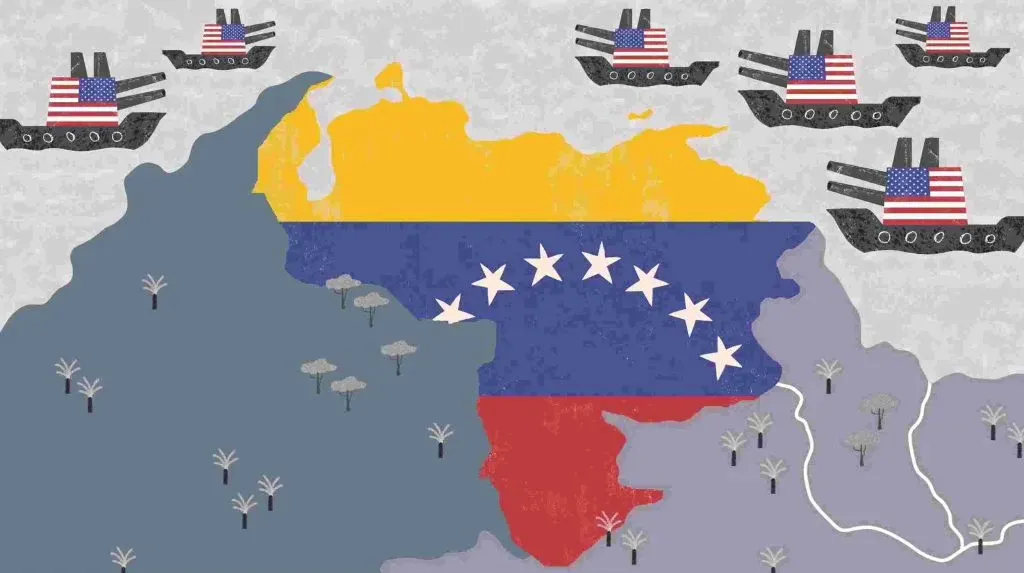
| Michel Chossudovsky Dec 20, 2025 By Drago Bosnic On December 16, American President Donald Trump formally ordered the “total and complete blockade” of Venezuela, claiming that its government is now designated as a “foreign terrorist organization” (FTO). In his signature manner of communicating through the unchecked use of superlatives, Trump also bragged that the US Navy “completely surrounded” Venezuela with “the largest armada ever assembled in the history of South America.” The fiercely independent Latin American country has a coastline only in the north, so the claim that it’s “completely surrounded” is patently incorrect. However, Trump’s lack of knowledge when it comes to basic, primary school geography is hardly surprising, given the fact that, at one point, he boasted about “ending war between Aberbaijan and Albania” (yes, you read that right, it’s a “b” instead of “z” for Trump). “Venezuela is completely surrounded by the largest Armada ever assembled in the History of South America. It will only get bigger, and the shock to them will be like nothing they have ever seen before — Until such time as they return to the United States of America all of the Oil, Land, and other Assets that they previously stole from us. The illegitimate Maduro Regime is using Oil from these stolen Oil Fields to finance themselves, Drug Terrorism, Human Trafficking, Murder, and Kidnapping. For the theft of our Assets, and many other reasons, including Terrorism, Drug Smuggling, and Human Trafficking, the Venezuelan Regime has been designated a FOREIGN TERRORIST ORGANIZATION,” he posted on Truth Social, adding: “Therefore, today, I am ordering A TOTAL AND COMPLETE BLOCKADE OF ALL SANCTIONED OIL TANKERS going into, and out of, Venezuela. The Illegal Aliens and Criminals that the Maduro Regime has sent into the United States during the weak and inept Biden Administration, are being returned to Venezuela at a rapid pace. America will not allow Criminals, Terrorists, or other Countries, to rob, threaten, or harm our Nation and, likewise, will not allow a Hostile Regime to take our Oil, Land, or any other Assets, all of which must be returned to the United States, IMMEDIATELY. Thank you for your attention to this matter!” |
Episode 329: War Economy vs. Peace Economy: Lessons from Venezuela and the Fight for Our Future
| CODEPINK Dec 13, 2025 Episode 329: War Economy vs. Peace Economy: Lessons from Venezuela and the Fight for Our Future: In this episode of CODEPINK Radio, CODEPINK co-founder Jodie Evans breaks down how the U.S. war economy shapes our politics, our culture, and our daily lives while offering a clear path toward building a peace economy rooted in care and community. Later on the show, Michelle Ellner connects these ideas to Venezuela, where communes and social programs have helped restore dignity to people long made invisible. As Washington pushes the region toward another conflict, despite 70% of Americans opposing a war with Venezuela, we explore what it means to resist the war economy and strengthen the movements creating a future based on sovereignty, connection, and collective well-being. |
Trump Pardons a Convicted Drug Dealer While Starting a War Against Venezuela to Fight “Drug Dealers
| By Timothy Alexander Guzman Recently, US President Donald Trump has pardoned Juan Orlando Hernandez, a former president of Honduras and a convicted drug trafficker known as the ‘Narco-Dictator’ who was convicted by a grand jury in New York City for importing 400 tons of cocaine and weapons into the United States. |
Video: War, Oil and Narcotics
| By Prof Michel Chossudovsky and Drago BosnicGlobal Research, November 29, 2025 |
Venezuela gegen Washington – Wird Trump mit Maduro sprechen?
Interview mit PressTV
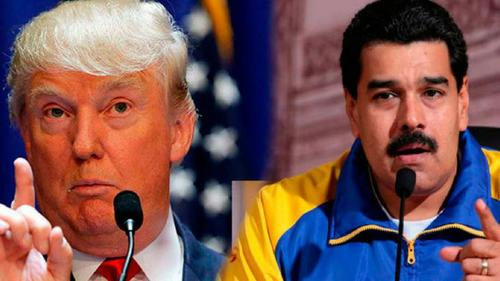
| Von Peter Koenig und Press TVGlobal Research, 20. November 2025 Hintergrund Während US- Präsident Donald Trump seine Bereitschaft zu Gesprächen mit seinem venezolanischen Amtskollegen signalisiert hat, erklärt Nicolás Maduro , Caracas sei offen für einen direkten Dialog, weise aber „Drohungen oder Gewaltanwendung“ zurück. Maduro fügte hinzu, Venezuela sei zu Gesprächen mit jeder Nation bereit, warnte aber gleichzeitig vor ausländischer Aggression. Diese Äußerungen erfolgten, nachdem Trump gegenüber Reportern erklärt hatte, seine Regierung werde möglicherweise zu einem bestimmten Zeitpunkt mit Maduro sprechen, um die zunehmenden Spannungen zu erörtern. Trump schloss jedoch einen Einsatz amerikanischer Bodentruppen in Venezuela nicht aus. Seit Anfang September hat das US-Militär mindestens 20 Angriffe auf Schiffe im Pazifik und der südlichen Karibik durchgeführt. Washington behauptet, ohne Beweise vorzulegen, die Boote seien in Drogenhandel verwickelt gewesen. Caracas weist die Vorwürfe jedoch zurück und erklärt, die Angriffe zielten darauf ab, die venezolanische Regierung zu stürzen. Analysten argumentieren nun, Trumps Behauptung, er sei gesprächsbereit gegenüber Maduro, entspreche Washingtons Zuckerbrot-und-Peitsche-Politik und sei nicht aufrichtig. Read more |
What is really happening in Venezuela? US attacks and economic situation explaine
An analysis of Donald Trump’s attacks on Venezuela, the economic impact of US sanctions, and the similarities and differences with the successful Western regime-change war on Syria.

| Ben Norton Nov 15, 2025 A Chinese journalist interviewed Geopolitical Economy Report editor-in-chief Ben Norton about the situation in Venezuela, and his analysis was translated into Chinese. The following were his original remarks in English: QUESTION: Ben, you have traveled around Latin America extensively, including in Venezuela. I would like to hear your comments on Maduro. Is his government well supported by the Venezuelan people, or may he face a similar fate like Syria’s Bashar al-Assad? As you know, Trump is planning attacks inside Venezuela. So do you think Maduro’s government will fall like Assad’s? MY ANSWER: There are indeed some parallels between Venezuela and Syria, but there are more differences than similarities. Venezuela is very divided politically, but in general, the Bolivarian Revolution initiated by previous President Hugo Chávez and continued by current President Nicolás Maduro still has a lot of support from poor and working-class Venezuelans. Most rich people and elites are pro-US and anti-government. Many of them have left the country, but there are still some in Venezuela (especially in wealthy areas like Chacao). In Venezuela, most people are tired of political conflict and violence, and they simply want stability. The right-wing opposition does not have many active supporters inside the country. Whenever they try to hold a protest, only a few hundred people show up. However, while they are small in number, they still have a lot of power concentrated in private companies, media outlets, and Western government-funded “NGOs”. Maduro will not be overthrown by people inside Venezuela. The only possible way I think the Venezuelan government will fall is if the US military invades Venezuela and/or wages a direct war inside Venezuelan territory, bombing Caracas — like what the US did to Iraq, Libya, Yugoslavia, Panama, Grenada, etc. (although the tactics used were different in each of those wars). Trump has already ordered the US military to kill dozens of Venezuelans in illegal, extrajudicial executions in international waters. Thus far, he has not launched direct attacks inside Venezuela, although he confirmed that he authorized the CIA to carry out destabilization operations inside the country. Read more |
Polls show that Trump’s war on Venezuela is very unpopular
The U.S. Navy deployment near Venezuela has become even less popular in the past month
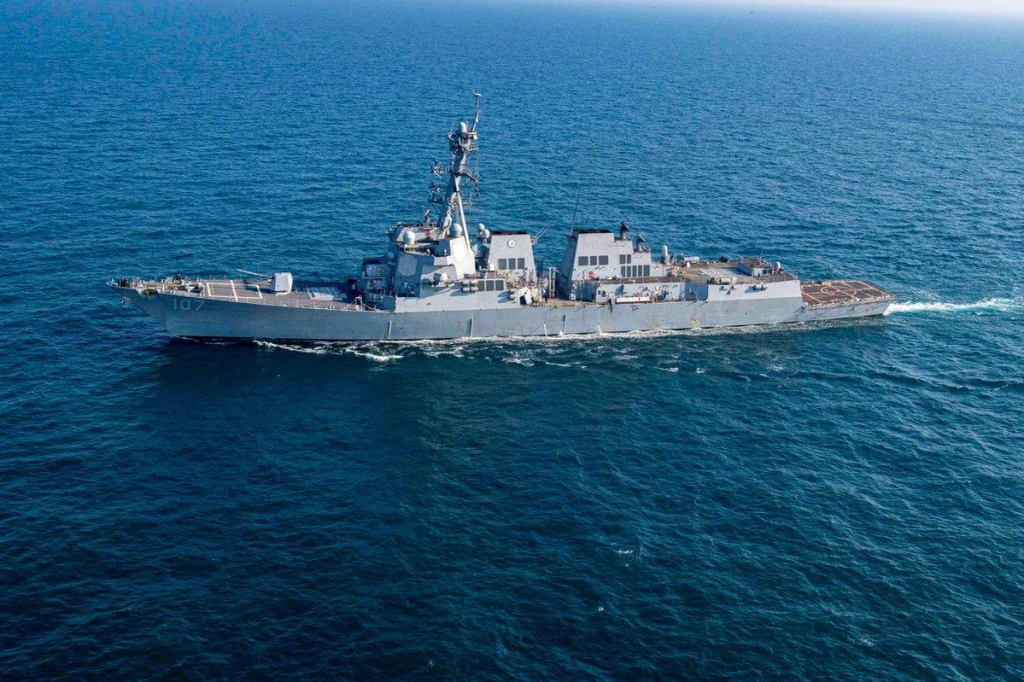
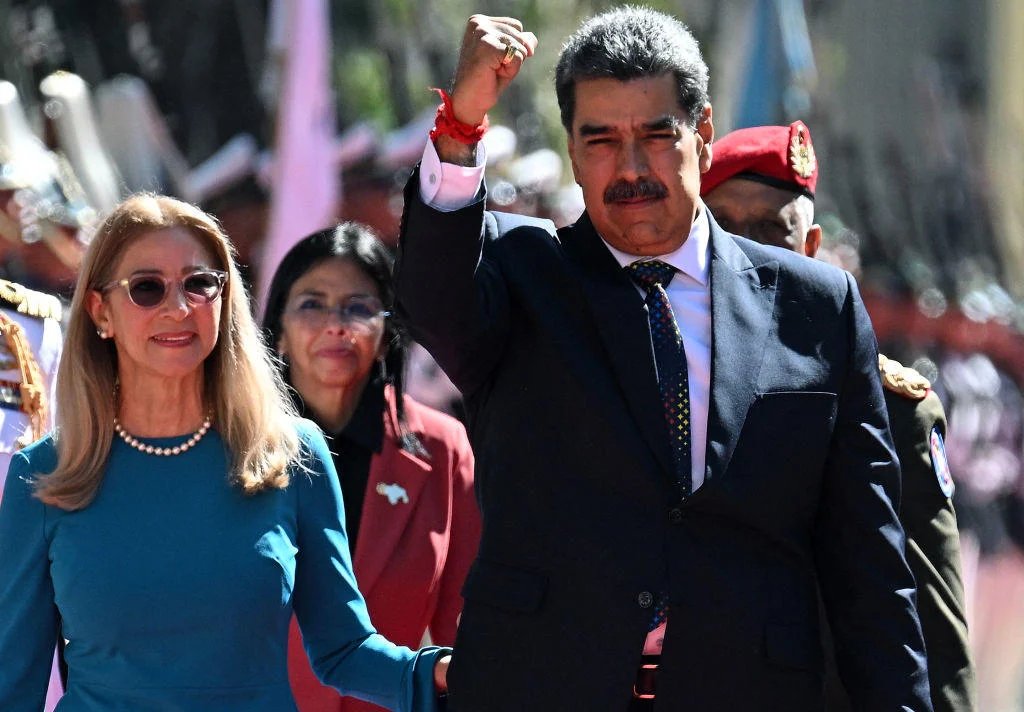
| In a new YouGov survey, we find that Americans have become less likely to approve of the U.S. Navy deployment around Venezuela since September. Americans are more likely to oppose than to support military strikes on Venezuelan ships and on land targets. Most Americans would oppose a military invasion of Venezuela. More Americans would oppose than support using military force to overthrow Venezuelan President Nicolás Maduro or conducting covert CIA operations in Venezuela. Another recent YouGov survey finds that Americans are divided about whether the U.S. strikes have been legal and whether the government has presented evidence that the targets have been drug smugglers. In September, YouGov surveyed Americans about U.S. military actions around Venezuela, after the U.S. military amassed ships in the Caribbean Sea around Venezuela and began attacks on Venezuelan ships that the administration claimed were shipping drugs. These attacks have killed dozens. Maduro has accused the U.S. of attempting to start a war and mobilized the country’s military in response. The United Nations has urged both countries to de-escalate. |
Migration from Venezuela
Did 7+ million really leave the country to flee socialism?
| The Anti Empire Project and Joe Emersberger Nov 11, 2025 Daniel Coronel, a journalist with the US-based television network Univision, recently interviewed Colombian president Gustavo Petro. At about the 55 minute point of the interview, Coronel said to Petro that “the misery and repression that Venezuela has suffered at the hands of Maduro’s dictatorship has caused millions to flee.” This little quip, this off-hand remark, is actually one of the major remaining regime change talking points about Venezuela. We’ve addressed most of the others – the elections, the constitution, the notion that Venezuela is an “extraordinary threat” to the US – in our book. In a recent substack, we addressed the newest lie: that Venezuela is a meaningful source of drugs to the US. In this one we address the idea that Venezuela should be destroyed because supposedly seven million Venezuelans have fled socialism. We believe that anti-Maduro sources have 1. grossly exaggerated the scale of migration from Venezuela since 2015, 2. ignored that US sanctions have caused such migration as did occur, and 3. also ignored mass migration from U.S. client states like Ecuador. |

| 2015 – 2017 migration from Venezuela begins to take off for real As a result of US sanctions and an oil price collapse, migration from Venezuela did, indeed, begin to explode in 2015. A few months before Hugo Chavez died of cancer in 2013, he urged his supporters to vote for Nicolas Maduro as his successor. They did. Maduro won the snap election that was held in April 2013. But Maduro was immediately hit with violent US-backed protests that year – and then again in 2014 and 2017. Adding to Maduro’s difficulties, in the last quarter of 2014, the high oil prices on which Venezuela’s economy depended collapsed by half, and remained very low for years. Early in 2015, Obama added to the pressure by imposing broad economic sanctions on Venezuela. Obama’s apologists deny the significance of the sanctions by saying they merely outlawed dealing with seven Venezuelan government officials that the US accused of human rights abuses. But this ignores the problem of “over compliance” with US sanctions, built into their design: scaring investors away from dealing with Venezuela at all. In addition to the sanctions, Obama officials successfully pressured banks not to make low risk loans to Venezuela’s government. Read more |
Colombia
Washington Targets Colombia’s Progressive President in Unprecedented Sanctions Move
Human rights attorney and legal counsel for Gustavo Petro in the United States, Dan Kovalik, calls U.S. sanctions against the Colombian President “a threat to democracy.”

| In a dramatic escalation of U.S.-Colombian tensions, President Gustavo Petro of Colombia has been sanctioned by the United States over allegations of drug trafficking, a move his legal counsel calls politically motivated and potentially destabilizing for the region. The sanctions, announced on Friday, October 24, mark a rare confrontation between Washington and a sitting Colombian leader, a country historically regarded as a steadfast U.S. ally in Latin America. Dan Kovalik, a human rights and labor attorney, political activist, and author, recently accepted the role of representing President Petro in the United States. Kovalik, who previously taught international human rights at the University of Pittsburgh School of Law and served as in-house counsel for the United Steel Workers, has a long history of litigating cases involving human rights violations in Colombia. His work has included lawsuits under the Alien Tort Claims Act against major corporations implicated in egregious abuses, including Coca-Cola, Drummond and Occidental Petroleum, highlighting systemic violence and exploitation against labor organizers and social movements in the region. Speaking from Pittsburgh, Pennsylvania, in a special edition of WTF is Going On in Latin America and the Caribbean, Kovalik described the sanctions as “not just a personal threat to President Petro and his family, but a significant risk to Colombia’s economic stability and political sovereignty.” Read more |
Honduras
Honduras ruling party alleges Trump-backed ‘electoral coup’
| The ruling leftist Libre party in Honduras has slammed what it called an “electoral coup” backed by Donald Trump and called for the annulment of last month’s vote amid allegations of irregularities in the counting process. Nasry Asfura, the conservative National Party candidate championed by the US president, is fractionally ahead of his Liberal Party rival Salvador Nasralla, according to partial results issued in a stop-start count plagued by technical glitches. Libre’s candidate Rixi Moncada trails in third place, but the party has disputed the results and on Sunday called for marches, protests and strikes, fuelling fears that discontent could spill over into the streets in a repeat of fatal protests following a contested election in 2017. “Libre does not recognise the elections held under the interference and coercion of US President Donald Trump and the allied oligarchy that have foisted an ongoing electoral coup on the people of Honduras,” the party said in a statement. The Department of Justice published a Press Release on June 6, 2024, titled, ‘Juan Orlando Hernández, Former President of Honduras, sentenced to 45 Years in Prison for Conspiring to Distribute More Than 400 Tons of Cocaine and Related Firearms Offenses.’ The following statement explains in a nutshell what Hernandez was clearly involved in: As President of Honduras, Juan Orlando Hernández abused his power to support one of the largest and most violent drug trafficking conspiracies in the world, and the people of Honduras and the United States bore the consequences,” said Attorney General Merrick B. Garland. “Thanks to the diligent work of the Justice Department’s agents and prosecutors, Hernández will now spend more than four decades in prison. The Justice Department will hold accountable all those who engage in violent drug trafficking, regardless of how powerful they are or what position they hold |
Mexico
Mexico at the Crossroads: Sovereignty, Solidarity, and the Pressure of a Powerful Neighbor

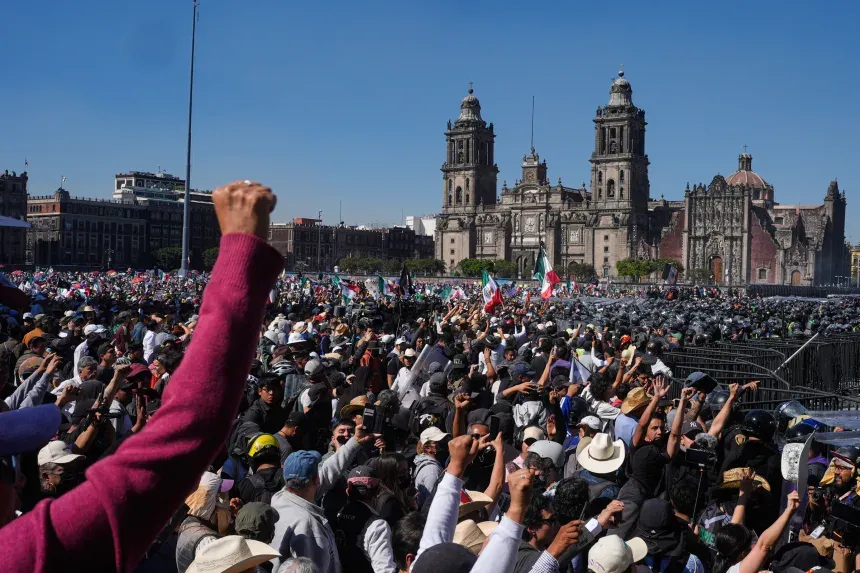
| Mexico is facing a familiar problem—one that has shaped its history for more than a century. How do you protect your sovereignty when you live next door to a superpower that sees your country less as an equal and more as a strategic asset? CODEPINK and Teri Mattson Feb 14, 2026 Teri Mattson, CODEPINK Latin America Team That question sits at the center of a wide-ranging discussion hosted jointly by CODEPINK’s WTF Is Going On in Latin America & the Caribbean and Soberanía, the Mexican Politics Podcast. Journalists and analysts Kurt Hackbarth and José Luis Granados use Mexico’s current moment to examine a broader set of pressures: economic coercion, foreign intervention, humanitarian crises, and the shrinking space for independent policy in a U.S.-dominated world. Their conclusion is sobering. Mexico is buying time—but the costs of that strategy are rising. |
Nicaragua
Nicaragua as a Regional Model
| By Stephen SeftonGlobal Research, February 05, 2026 Nicaragua plays an essential role in the development of Central America not only because of its geographical position in the center of the isthmus but also because of the success of its revolutionary model of socio-economic democratization. Nicaragua has demonstrated that public policies for development focused on the needs of the human person yield better results than a neoliberal focus on corporate profits. Nicaragua’s productive economy is highly competitive with the economies of its neighboring countries, while its public sector responds much better to the aspirations of the families of the vast majority of its population. |
Puertorico
Puerto Rico “INDEPENDENCIA Plan B”: Build a Productive Economy Beyond US Neoliberal Constraints
This is a shift from a rentier-based model to an industrial capitalist model, where profit is derived from building up the island’s productive forces, not from stripping them.
| By Miguel Santos García Global Research, December 23, 2025 |
Bolivia
Secretary of State Marc Rubio Celebrates Return of Neoliberalism in Bolivia. “Prosperity will Benefit Private Foreign Investors”
Trump’s corollary to the Monroe Doctrine is focused on continued exploitation of Latin America’s natural resources

| By Kurt Nimmo Global Research, December 23, 2025 “We applaud President [Rodrigo] Paz’s historic efforts to open Bolivia to the world by committing to meaningful reforms to attract international investment,” Rubio said in a statement. “U.S. government officials are currently in Bolivia seeking to facilitate investments that will foster prosperity for both our nations.” The “prosperity” envisioned by Rubio will benefit private foreign investors. The land-locked Andean country is rich in natural resources. Bolivia has the world’s largest identified lithium reserves, primarily in the Salar de Uyuni salt flat. Rare earth mineral deposits, namely anthanum and neodymium, are located in the Cochabamba and Santa Cruz regions. Other minerals include silver, gold, tungsten, copper, iron ore, bismuth, gypsum, zinc, antimony, and gemstones. Natural gas represents the country’s most valuable export, concentrated in the eastern departments of Tarija and Santa Cruz. In 2024, the State Department warned investors to “remain cautious about investing in Bolivia” due to the Movement Towards Socialism (Movimiento al Socialismo) government of President Luis Arce and its desire to nationalize Bolivia’s natural resources. “There is no significant foreign direct investment from the United States in Bolivia, and there are no specific incentives to encourage U.S. Investment,” according to the 2024 State Department Investment Climate Statement. This changed when Rodrigo Paz, the candidate for president of the Christian Democratic Party (Partido Demócrata Cristiano), won a run-off election against former president Jorge Quiroga in October. Rodrigo Paz is the son of former president Jaime Paz Zamora. He promised to institute “free-market reforms” and restoration of ties with the United States and other “trading partners,” particularly in regard to Bolivia’s lithium and rare earth reserves. In a move that undoubtedly pleases the United States, the Paz government plans to move away from its previous relationship with China. |
Panama Supreme Court Targets Chinese Conglomerate Administering Ports with “Economic Lawfare”
| By Miguel Santos García A recent ruling by Panama’s Supreme Court, declaring the concession contract for two critical ports operated by Hong Kong-based CK Hutchison Holdings “unconstitutional,” represents a calculated escalation in economic statecraft against Chinese strategic infrastructure. |
Cuba
Cuba on Fumes as Rubio Smirks, Trump Flip-Flops on Criminal Blockade
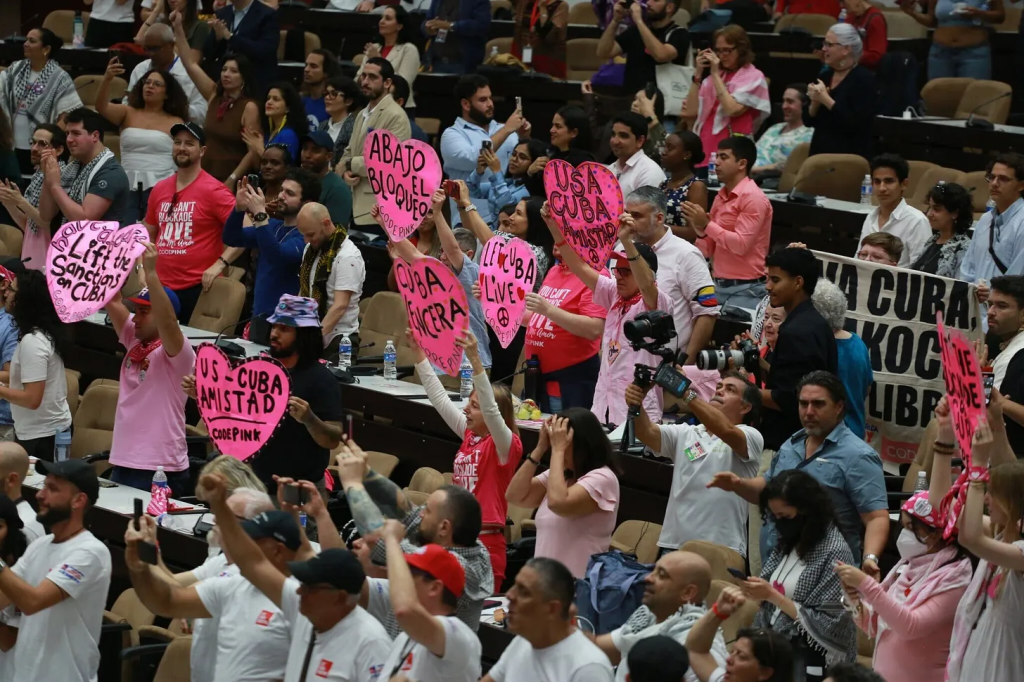
| By Ann Wright, Former U.S. Diplomat CODEPINK Mar 31, 2026 As 700 international solidarity citizens visited Cuba last weekend, Cuban-American Secretary of State Marco Rubio smirked at the humanitarian disaster his and Trump’s policies were wrecking on Cuba, as a small island nation of 9 million people, only 90 miles off the tip of Florida. Rubio had predicted the Cuban government would fall from the disastrous policies, particularly the blockade of fuel to the island. But Rubio’s plan was partially upended on Sunday night, March 29, when President Trump decided to allow a Russian oil tanker carrying 100 tons of oil to deliver it to Cuba. |
Bend or Break: Will Cuba Become Donald Trump’s Next Trophy?
Canadian Internet Platform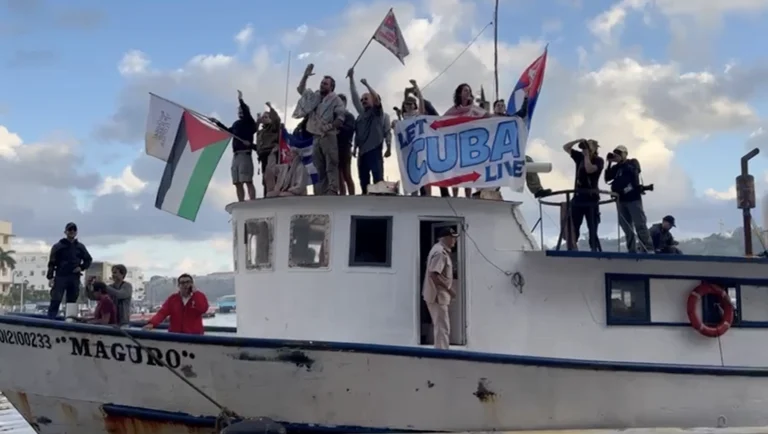
| By Marc Vandepitte Global Research, April 01, 2026 Without energy and without a strategic partner, Cuba is currently fighting for its survival. While the population is literally sitting in the dark, the Trump administration is trying to definitively break the socialist project through economic blackmail. What lies ahead for the island? Since the revolution of 1959, Cuba has been a thorn in Washington’s side. The existence of a socialist project barely 150 kilometers from the American coast was unacceptable. Generations of presidents tried to bring the island to its knees through sabotage, isolation, and economic pressure. The Cuban example had to disappear, or at least be damaged to such an extent that it could no longer provide inspiration. This strategy led to the longest-lasting economic blockade in modern history, which still determines the lives of millions of Cubans today. |
Watch: US is strangling Cuba with a fuel blockade … but Cuba is not fighting alone
A talk with Manolo De Los Santos, Executive Director of the People’s Forum
| Li Jingjing Apr 01, 2026 The US is strangling the Cuban people with an energy blockade, which leads to daily blackouts, severe gas shortages, and deteriorating medical care, but Cuba is not alone. Countries like China, Russia and international activists from around the world are sending aid into the country. Manolo De Los Santos was among the activists who went to Cuba on a humanitarian aid program. He shares with us how the Cuban people are resisting the bully. Cuba resisting fiercely against U.S. blockade 31.03.2026 Podcast: Talk It Out with Li Jingjing #cuba The US is strangling the Cuban people with an energy blockade, which leads to daily blackouts, severe gas shortages, and deteriorating medical care, but Cuba is not alone. Countries like China, Russia and international activists from around the world are sending aid into the country. Manolo De Los Santos was among the activists who went to Cuba on a humanitarian aid program. He shares with us how the Cuban people are resisting the bully. 00:00 – 01:03 Highlights of this episode 01:04 – 02:40 Latest development 02:41 – 10:07 Damage of 66 years of embargo and fuel blockade 1 0:08 – 12:50 Cuban people are resisting 1 2:51 – 15:21 Russian oil reaches Cuba 15:22 – 17:33 Attacks on Latin America is just the begining 17:34 – 22:49 ‚No King‘ Protest |
How U.S. Sanctions Are Fueling Hunger in Cuba
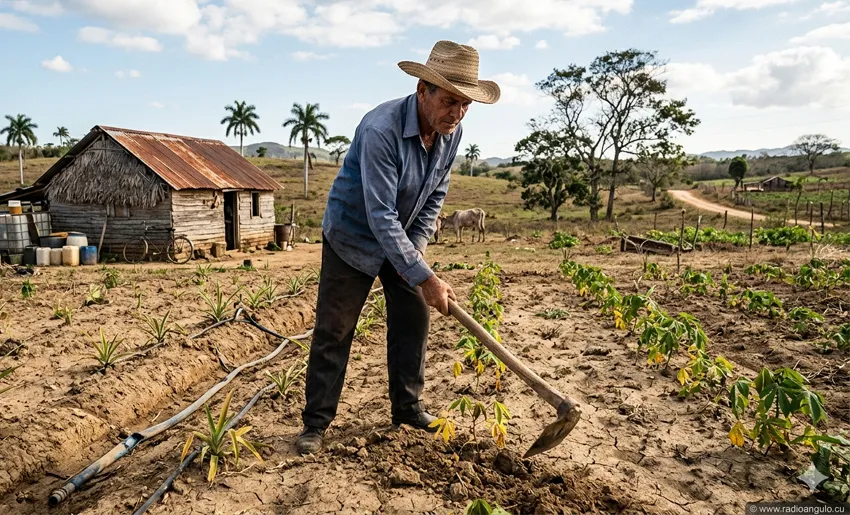
| Medea Benjamin Apr 03, 2026 In Cuba today, food is rotting in the fields while families go hungry. On a recent trip to the eastern part of the island, I spoke with farmers who are watching their livelihoods slip away—not because they lack skill or dedication, but because they lack fuel, parts, and basic inputs. One farmer described fields ready to harvest but no diesel to bring the crops in. Others showed broken machinery they have no way to repair. Even those who have turned to animal traction are having problems with feed.These are not isolated stories; they reflect a system under siege. The U.S. fuel embargo, together with tightened sanctions under Trump, is strangling Cuba’s agricultural system from seed to table—making it harder and harder for Cubans to feed themselves. Cuban farmers have already been operating under severe constraints imposed by U.S. sanctions—struggling to obtain spare parts to repair tractors, access fertilizers and pesticides, or secure basic inputs like seeds. Machinery breaks down and sits idle for months because parts can’t be imported or paid for through normal banking channels. |
The U.S. War on Cuba’s Doctors

| Nuvpreet Kalra, CODEPINKCODEPINK Apr 02, 2026 “Cuban eye doctors in Jamaica are the only reason why my grandmother didn’t go fully blind in one eye after she got a botched surgery. The work they’ve done for rural and poor Jamaicans is immeasureable”, wrote a Twitter user last week after the first set of Cuban doctors and nurses left Jamaica. Two weeks ago, hundreds of Jamaicans marched in a “gratitude walk” to thank Cuba for the 50 years of medical solidarity that they have received. Meanwhile others on the island have been reportedly rushing to get eye treatment at clinics before Cuban doctors were set to depart. A few weeks before in Honduras, people were in tears as they applauded and thanked Cuban doctors for their years of service, particularly in providing free eye surgeries. If this is clearly contrary to the interests of people, why are all Cuban doctors, nurses, biomedical engineers, and technicians leaving? They are not leaving because these countries want them to, but because the United States is forcing them to. |
What I Saw in Cuba Was Resilience
| By Gerardo Delgado CODEPINK Mar 27, 2026 I traveled to Cuba this month. As a Cuban American, that sentence carries the weight of longing born of an estrangement from my roots. For much of my life, Cuba existed as a distant story, a place I knew only through descriptions from my father. I was there as part of an international solidarity convoy; over 500 representatives from more than 30 countries, united by a simple conviction: no country has the right to strangle another simply because it chose a different path. I cannot stand by while the island of my family’s heritage is suffocated. What I witnessed over those days was not the Cuba of Western propaganda. It was a country enduring a 66-year siege, and a people who, against all odds, continue to build, create, and care for one another. |
Exclusive: Cuba Is Prepared to Discuss Compensation to Americans Who Lost Property in the 1959 Revolution
Cuba is willing to put the “lump sum” compensation measure on the table in talks with the U.S., a Cuban official told Drop Site.
| HAVANA, Cuba—The Cuban government is prepared to discuss offering “lump sum” compensation to Americans and American firms that saw property nationalized after the 1959 revolution, Deputy Foreign Minister Carlos Fernandez de Cossio told Drop Site News in an interview. The “lump sum” agreement—meaning that Cuba would pay the U.S., which would then handle the claims—would need to be a part of a broader “holistic” deal that would address U.S. sanctions and the blockade and also allow for an amount of American investment in Cuba that previously had been forbidden, he said. |
Kuba: zwischen Druck und Deal

| Nach dem landesweiten Blackout wächst auf Kuba der Druck. Havanna signalisiert wirtschaftliche Öffnung, während Trump mit schärferem Kurs und vagen Drohungen spielt. Abononiere Gabor Steingart, um weiter zu lesen Pay-what-you-want oder die Frage: Was ist Ihnen unabhängiger Journalismus wert? |
Trump Can’t Blockade Love: Why I’m Going to Cuba

| By Leonardo Flores Global Research, March 18, 2026 CODEPINK I’m traveling to Cuba for the first time on March 21 to be in Havana with the Nuestra América Convoy, in which people from dozens of countries representing a variety of organizations will break the blockade, bringing much-needed supplies to the island. CODEPINK is bringing 6,300 pounds of medical equipment and medicine with help from Global Health Partners and others. These supplies will be given to clinics, hospitals, and maternity centers as Cuba deals with the latest horrifying crime against humanity perpetrated by the United States. The U.S. is blockading oil, seizing and chasing away Cuba-bound tankers in the Caribbean. No oil whatsoever has entered the island since early December. Trump characterized Cuba as an “unusual and extraordinary threat,” paving the way for more unilateral coercive measures (so-called sanctions). Rubio, in his dual positions of Secretary of State and National Security Advisor, twists the arms of countries around the world to expel Cuban doctors. On top of this are the repeated threats of military strikes from Trump and his allies, along with worrying events: a failed incursion by a group of ten Cuban Americans, including two on Cuba’s terror watch list; and an uncovered plot in which ten Panamanian residents of Cuba were to be paid to spread “subversive content” with the hopes of starting protests. These extremists want war with Cuba and see “no reason to show them mercy,” as an anonymous member of the Cuban American diaspora told Politico. Bombs have not fallen, but Trump’s economic warfare is killing children. |
By Leonardo Flores Global Research, March 18, 2026 CODEPINK
Cuba Neutralized Armed Infiltration Attempt Tied to US Group Intending to Commit Terrorism
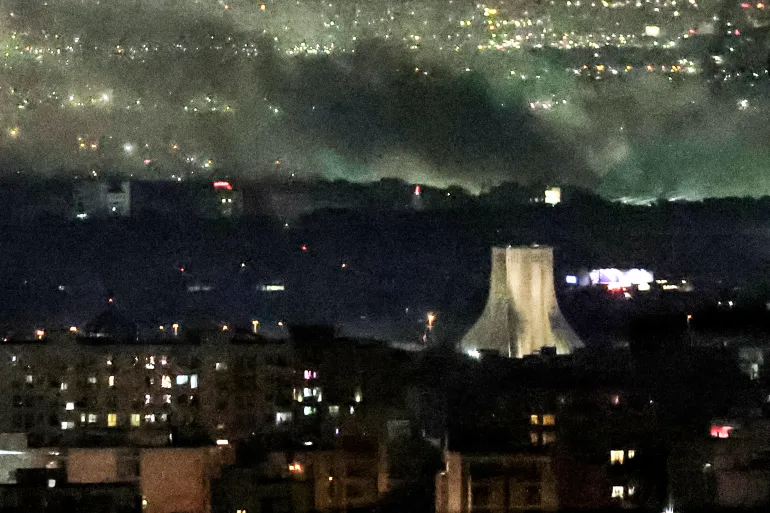
| By Miguel Santos García Global Research, February 27, 2026 Cuban authorities have provided a detailed account of a thwarted armed infiltration attempt in the northern province of Villa Clara, confirming that the operation was carried out by Cuban nationals residing in the United States with the intent of committing terrorist acts. The Ministry of the Interior released an extensive update on the investigative process regarding the armed aggression against a surface unit of the Border Guard Troops. The incident occurred in the northeastern area of the El Pino channel, near Cayo Falcones in the municipality of Corralillo, where state security forces successfully neutralized the threat. According to the official report, the operation targeted a fast boat registered in Florida with the license plate FL7726SH, which was transporting ten armed individuals. According to Cuban officials, preliminary statements from the detainees revealed that the group’s objective was to carry out an infiltration mission with specific terrorist aims. Upon neutralizing the vessel, authorities seized a significant cache of military-grade equipment, including assault rifles, small arms, homemade explosive devices such as Molotov cocktails, bulletproof vests, telescopic sights, and camouflage uniforms. All individuals implicated in the event are Cuban citizens currently residing in the United States, with most having documented histories of criminal and violent activity. The Ministry’s statement said that two of the detained, Sánchez González and Cruz Gómez, are particularly notable due to their prior inclusion on the National List of individuals and entities investigated under the framework of United Nations Security Council Resolution 1373, international law, and Cuban legislation. This designation is due to their documented involvement in promoting, planning, organizing, financing, supporting, or executing terrorist acts in Cuba and other nations. |
To the People of Cuba: Is Washington Preparing a “Soft Coup”? The Co-optation of Cuban Intellectuals
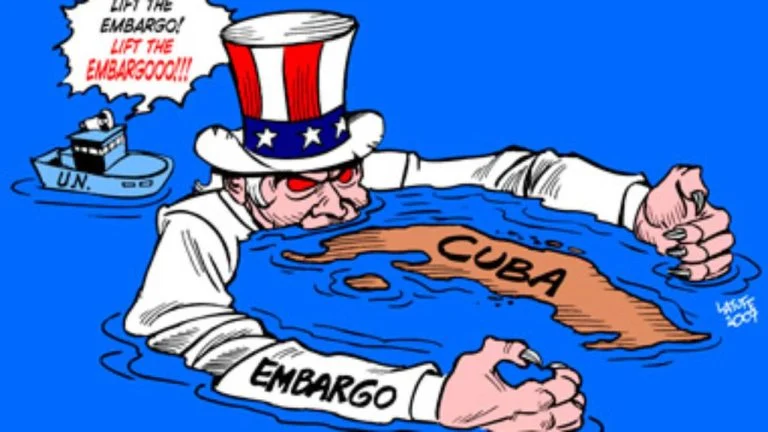
| By Prof Michel Chossudovsky Global Research, February 11, 2026 El Golpe Blando (Soft Coup) was discussed on October 14, 2015 by a small group of prominent Cuban intellectuals and politicians. The meeting took place on the sidelines of a conference organized by the Centro de Investigaciones de Politica Internacional (CIPI), a Research Centre and Think Tank affiliated to the Ministry of Foreign Affairs. The U.S. “Soft Coup” against Cuba was never carried out by Washington. What is now unfolding in January-February 2026 under MAGA Trump is by no means “Soft”. Following the U.S. attack on Venezuela and the kidnapping of President Maduro, Cuba is the object of a process of deliberate destabilization: An entire country is targeted on the orders of the Trump administration. It’s “The Blockade of Cuba” which has triggered a social and economic upheaval, not to mention the paralysis of schools and hospitals, the destabilization of productive activity, the closing down of air travel, crisis in transportation, the impoverishment of an entire population, extensive food shortages, no oil, no electricity, following the cut-off in the delivery of petroleum from Venezuela. “The Blockade of Cuba” is a preamble to Regime Change. It’s Crimes against Humanity. |
Suffocating an Island: What the U.S. Blockade Is Doing to Cuba
| Medea Benjamin and CODEPINK Feb 11, 2026 Marta Jiménez, a hairdresser in Cuba’s eastern city of Holguín, covered her face with her hands and broke down crying when I asked her about Trump’s blockade of the island—especially now that the U.S. is choking off oil shipments. “You can’t imagine how it touches every part of our lives,” she sobbed. “It’s a vicious, all-encompassing spiral downward. With no gasoline, buses don’t run, so we can’t get to work. We have electricity only three to six hours a day. There’s no gas for cooking, so we’re burning wood and charcoal in our apartments. It’s like going back 100 years. The blockade is suffocating us—especially single mothers,” she said crying into her hands “and no one is stopping these demons: Trump and Marco Rubio.” |
Despite Marco Rubio’s Warnings, This is the Time to Go to Cuba in Solidarity Against Latest U.S. Aggressions
I came back from Cuba over last weekend. I had not been in Cuba since a year ago.
| CODEPINK Feb 12, 2026 By: Colonel (Ret) Ann Wright Despite the warnings from the U.S. State Department and Marco Rubio, now is the time for U.S. citizens to travel to Cuba in solidarity with the Cuban people against the latest U.S. aggressions in the Caribbean and Latin America. You Can Go to Cuba. Now of all times, it is important for U.S. citizens to show solidarity with the Cuban people against the threats of the U.S. government by travelling to Cuba. Yet, most U.S. citizens do not realize that they can go to Cuba as an individual or in a group. |
White House Declares National Emergency Over Cuba, Unveils Punitive Oil Tariffs
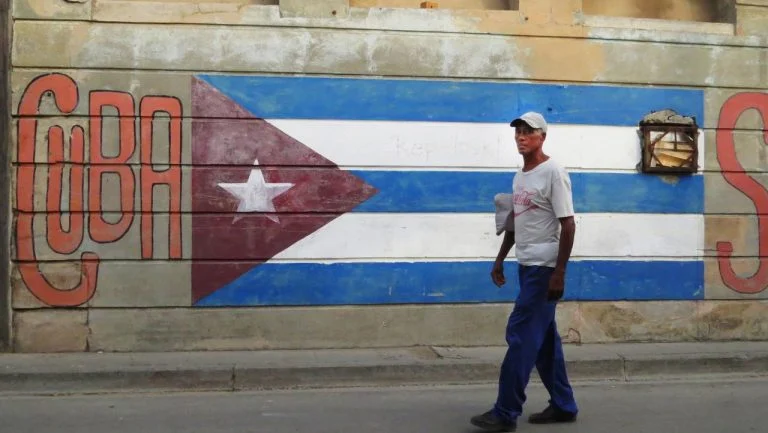
| By Miguel Santos García Global Research, February 03, 2026 The Trump administration 2.0, with Secretary of State Marco Rubio, has swiftly moved to sharpen its focus on Latin America, explicitly singling out the governments of Cuba, Venezuela, and Nicaragua as primary targets of its foreign policy. This renewed offensive follows months of escalating regional tension, punitive siege on the Caribbean since August 2025 using lethal force against individuals on small boats, the seizing of Venezuelan related oil tankers stealing their cargo and the kidnapping of Venezuelan president Nicolas Maduro. Now the administration continues to double down with this sweeping executive order declaring a national emergency over Cuba, a move that continues a maximalist pressure campaign aimed at compelling political capitulation across the hemisphere. |
To the People of Cuba: Is Washington Preparing a “Soft Coup”? The Co-optation of Cuban Intellectuals
| Michel Chossudovsky Dec 31, 2025 In October 2010, I was invited to the home of Fidel Castro in the outskirts of Havana to discuss US foreign policy, the dangers of nuclear war, the global economic crisis and the unfolding New World Order. These meetings which extended over several days resulted in a wide-ranging and fruitful conversation which was published by Global Research and Cuba Debate. I should mention that Fidel Castro was an avid reader of Global Research. His writings were also featured on our website. While Fidel fully understood the insidious role of NGO’s and philanthropic foundations in supporting Washington’s covert meddling operations inside Cuba, he expressed hope that there would be a turn-around with Obama, for whom he had high regard. When we started our discussions on a Tuesday afternoon, Fidel had already read from cover the cover Bob Woodward’s book entitled Obama’s Wars, which had been released a few days earlier in Washington (expedited to Havana in the diplomatic pouch). |
Peru
The World Economic Forum and the Juliaca, Puno, Peru Massacre of 9th of January 2023
| By Peter Koenig Global Research, February 08, 2026 You may ask, what does the WEF have to do with the Juliaca massacre of 9th of July 2023? The short answer is – EVERYTHING. The Peruvian-Spanish documentary “Uyariy” (Aymara for “Listen”) is an extraordinary coverage of the massacre ordered by Peruvian President Dina Boluarte of peaceful protesters in Juliaca, near Puno in Peru. The movie was released in cinemas on 8 January 2026, the eve of the 3rd Anniversary of the 9th January 2023 carnage in Juliaca, claiming 18 deaths and hundreds of injured people. It was temporarily censored, taken off screens in Lima, but is now back again. See this for a quick movie reference. |
Panama
Beijing Shows Panama The Cost Of Abandoning Neutrality
Panama breaks neutrality under US pressure, expropriating Chinese ports. Now facing $2B arbitration and Beijing’s retaliation, Canal nation risks economic instability amidst great-power competition.
Think BRICS and Miguel Santos García
| For decades, Panama successfully cultivated a foreign policy posture of strict neutrality defined by its unique geography centered on the operation of the Panama Canal. This small-state hedging strategy allowed Panama to welcome commercial presence from both the United States and China while maintaining the waterway’s treaty-based impartiality. However, in early 2026, this equilibrium shattered. Following Trump’s victory last year Panama has exited China’s Belt and Road Initiative and already signaled its alignment with US security concerns, yet it has secured no binding commitment that Washington to make up for the loss of investment. |