The Conclusion of the Federal SDF Project in Syria: Impact on Suwayda and the Coast
| The Levant Studies Unit|6 Feb 2026 Key takeaways The swift retreat of Kurdish forces in northeastern Syria marked a significant shift in the Syrian landscape, with potential implications for the Alawites in the coastal region and the Druze in the south. Both communities will need to reassess their positions in light of these new developments. The SDF played a crucial role in supporting the federal project in Syria and in bolstering the positions of various actors in Suwayda and the coastal region. Its sudden absence has undermined the confidence of Alawites and Druze in the Kurds as a reliable local ally capable of advancing a federal system in Syria. In light of recent events, Alawite factions advocating dialogue and collaboration with the Syrian government are likely to gain the upper hand. Their objectives are expected to include securing arrangements similar to those sought by the Kurds, such as community self-defense, representation in the People’s Assembly and participation in state institutions. Although the situation in southern Syria remains uncertain and will take time to stabilize, the successful resolution of the Kurdish issue by Sharaa without major concessions is likely to strengthen his authority within the Syrian context. This, in turn, may limit the Druze’s room for negotiation and maneuver in the southern region. The Syrian Army’s recent operation against the Syrian Democratic Forces (SDF) has significantly undermined the federal project in Syria. This operation reflects the determination of President Ahmad al-Sharaa’s government to reestablish control over key areas and centralize decision-making authority, thereby reducing the influence of local governing bodies in the east, south and west. With the elimination of a key player in the federal project, the balance of power has shifted firmly toward Damascus. This analysis examines the implications for the coastal and Suwayda regions, considers potential consequences and outlines possible future trajectories. |
Implications of Developments in Eastern Syria for Iraq: Challenges Posed by ISIS and the SDF
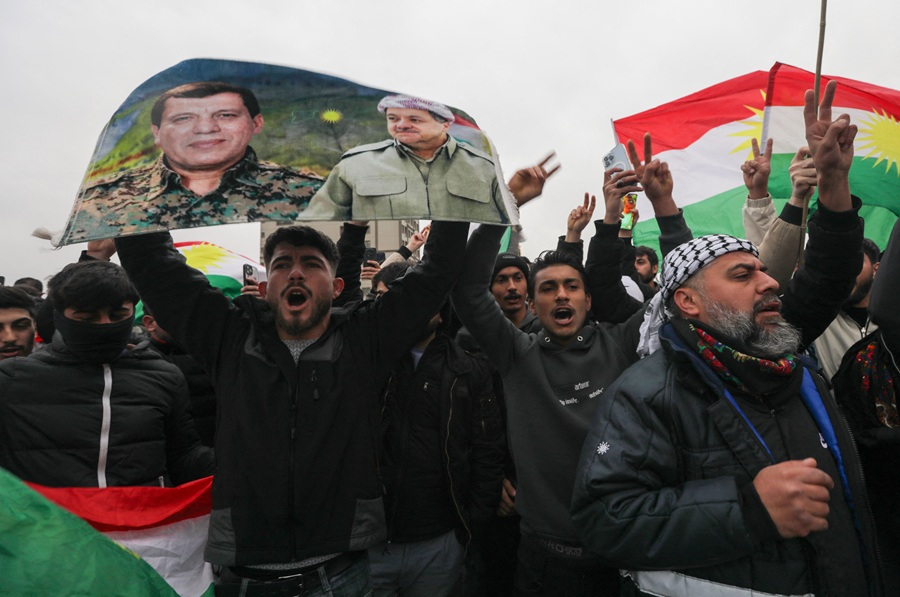
| Iraq Studies Unit|4 Feb 2026 Key takeaways Iraq is increasingly concerned about the security implications of the withdrawal of Syrian Democratic Forces (SDF) fighters and their supporters from the Kurdistan Workers‘ Party (PKK) in areas east of the Euphrates. Erbil fears that northeastern Syrian border regions could become security hotspots. There are also fears that relocating these fighters to the Kurdistan Region of Iraq could escalate tensions with Turkiye. Baghdad is also concerned about the status of many ISIS detainees in Syria. Consequently, Iraq has opted to transfer hundreds of ISIS detainees of various nationalities to Iraqi prisons. Nevertheless, this decision faces various obstacles, including legal constraints, prison overcrowding and financial pressures. Iraq’s response to developments in eastern Syria could follow two paths: one involves increasing the presence of armed factions along the Iraqi-Syrian border, which could generate significant friction; the other entails pursuing a political solution through a comprehensive Iraqi-Syrian agreement to secure both sides of the border and normalize bilateral relations. The collapse of the SDF and Iraq’s acceptance of ISIS prisoners could evolve into major crises if Iraq’s response to developments in Syria prioritizes Iranian interests over Iraqi national interests, or if the Syrian security situation spills over into conflict along the Iraqi-Syrian border. Once the Syrian army advanced into regions east of the Euphrates previously controlled by the Syrian Democratic Forces (SDF), two critical issues emerged. The first concerned the future of SDF fighters and their affiliates from the withdrawing Kurdistan Workers‘ Party (PKK), whether through continued combat or negotiated arrangements. The second centered on the fate of numerous ISIS members and families detained in approximately 25 camps and facilities in Syria, overseen for years by the SDF with US support. |
The Collapse of the SDF East of the Euphrates and the Emergence of a New Military and Political Landscape in Syria
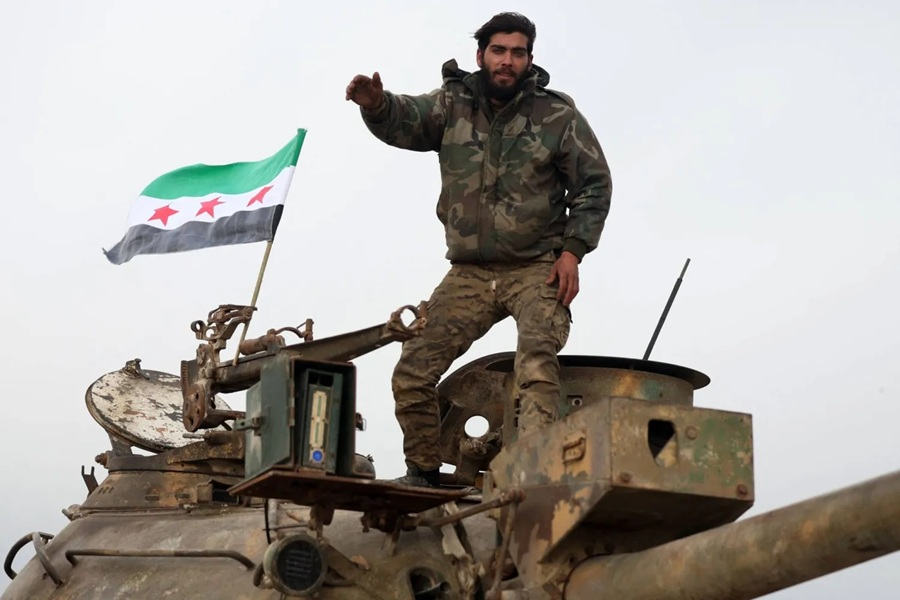

| The Levant Studies Unit|28 Jan 2026 Key takeaways Syrian government forces carried out a large-scale and rapid operation in northeastern Syria, which led to the collapse of the Syrian Democratic Forces (SDF) and the breakdown of both its structure and hopes of consolidating Kurdish self-administration in the region. The SDF could attempt to consolidate its position in Kurdish areas by seeking support from the Kurdistan Workers’ Party (PKK). Such a strategy would significantly raise the cost of confrontation and is likely to result in a costly and prolonged war of attrition, exacting a heavy toll on all sides, particularly the Kurds. Although Sharaa may currently hold the advantage and the capacity to forcibly enter Kurdish territories, outright war may not be the most effective strategy. His greatest challenge lies in his ability to persuade a Syrian Kurdish force under Abdi’s leadership to distance themselves from the PKK by addressing unresolved disputes between the two sides. |
The Crisis in Homs and Sectarian Issues in the New Syria: The Need for a National Political Framework


| The Levant Studies Unit|15 Jan 2026 Key Takeaways Sectarian incidents in Homs Governorate in November and December highlight the vulnerability of President Ahmed al-Sharaa’s governance framework, particularly in its ability to accommodate minorities such as Alawites, who feel threatened and excluded. Despite broad regional and international support, President Sharaa continues to grapple with significant obstacles in fostering internal unity. This is primarily due to his reliance on an overarching approach that overlooks key integration mechanisms such as reconciliation, representation and accountability. Opening Syria’s political space remains a viable option. By enacting laws to regulate political parties and civil society, Sharaa could establish a framework for national reconciliation, transitional justice and professional organizations. Such steps would not only reinforce Sharaa’s authority but also foster stability, attract investment, accelerate reconstruction and reduce the influence of foreign actors in Syria. In the post-Assad era, Syria faces significant societal challenges that expose the fragile balance between different social groups and the new government. A murder in Zaidal, a town in the Homs countryside in November 2025, escalated into a sectarian crisis that spread into security tensions and public protests along the coastal region. The bombing of the Imam Ali bin Abi Talib Mosque in the Wadi al-Dhahab neighborhood of Homs on December 26, 2025, further deepened existing sectarian divides. These incidents illustrate how local events can quickly evolve into national security threats, underscoring the need for proactive policies that extend beyond immediate crisis response. |
The Take: What Aleppo’s fighting reveals about Syria’s fragile peace
| A fragile ceasefire in Aleppo raises urgent questions about Syria’s unity. |

| A ceasefire in Aleppo has halted days of deadly fighting between the Syrian army and the Kurdish-led Syrian Democratic Forces (SDF). With civilians displaced and trust deeply shaken, questions are growing about whether Syria’s post-war transition can survive in the long term. |
US-NATO’s “Counter-Christmas Crusade” against Syria, the Cradle of Civilization and the Holy Land
| By Felicity Arbuthnot Global Research, December 24, 2025 First published on December 17, 2015 “It’s really 19th century behavior in the 21st century. You just don’t invade another country on phony pretexts in order to assert your interests.” -John Kerry, “Meet the Press”, 2nd March 2014. There has been a searing irony to Christmas since August 1990 and the decimating embargo on Iraq. It marked the beginning of the destruction of the region where the three Abrahamic religions were born at Ur in southern Iraq, where the Garden of Eden is believed to have flourished at Al-Qurnah, translation “connection” or “joint”, since it is where the Biblical Tigris and Euphrates rivers join. Geographically next door to Syria is what remains of Israeli occupied Palestine, Christ’s birthplace in Bethlehem, where, at what is now the Church of the Nativity (image left), He was believed born. Above are just a few of the jewels of a region now decimated by that created by George W. Bush’s and Tony Blair’s “Crusade,” not to mention Obama and Cameron’s “humanitarian bombings” of the Land of two Rivers. Ur was vandalized by the US army, who arrived with Bibles in vast stocks, missionaries and plans for proselytizing those who had nurtured and stewarded the region’s wonders of all religions for centuries. Al-Qurna was stormed and devastatingly damaged by British, Lithuanian and Danish troops, the Tree of Knowledge whose legend and life seemingly spanned the mists of time, died, near certainly from the poisonous pollution of battle, more poisonous even than that which destroyed over half all fauna and flora after the Desert Storm 1991 onslaught, leaving the soil dead and infertile for years afterwards. |
One Year After the Transformation in Syria: Foreign Support and Internal Vulnerability

| Key Takeaways One year into its rule in Syria, the Sharaa administration’s most significant achievement has been securing international legitimacy and support from the Trump administration. However, its major setback lies in its insistence on exclusivity in shaping the transitional phase. This approach limited broad social participation and fueled tensions with national and sectarian groups – including Kurds, Alawites and Druze – ultimately undermining efforts to unify Syrian territory. In terms of security, social and economic services, the administration has experienced both successes and failures. Key challenges facing Sharaa include the absence of a fully functioning government system, difficulties in asserting control over military and security forces, persistent Israeli interference and the lack of a well-defined roadmap for transitioning to a market-based economy. |
| It has been a year since the political transformation in Syria, with Hay’at Tahrir al-Sham (HTS) and its allied Islamic factions seizing power following the overthrow of Bashar al-Assad’s regime on December 8, 2024. Over the past year, the new leadership has experienced both successes and failures. Some achievements have been recorded domestically and internationally, while various challenges continue to shape Syria’s future. |
Implications of Sharaa’s Visit to Washington for His Regime’s Domestic and Regional Position
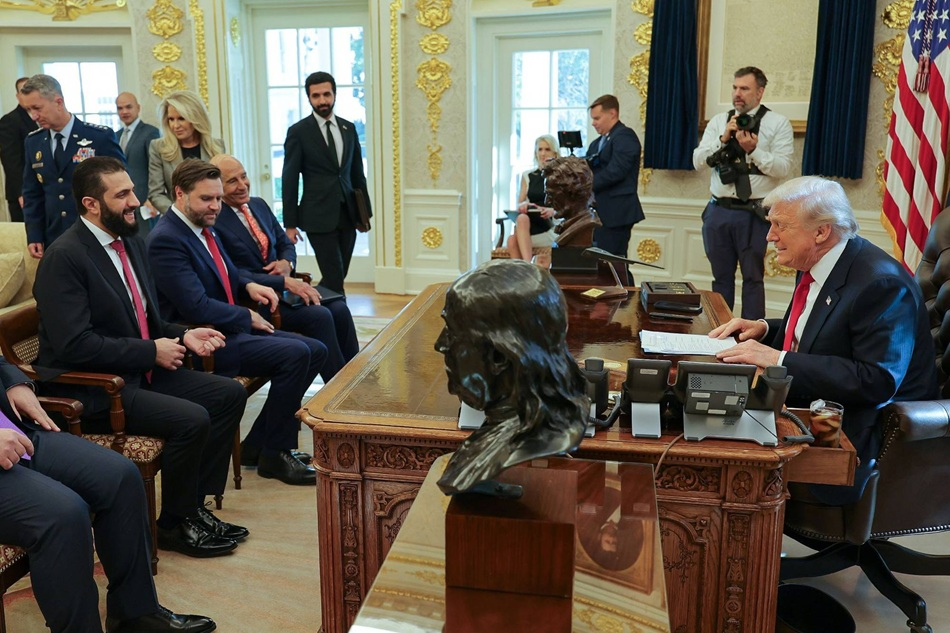
| The Levant Studies Unit| 17 Dec 2025 Key Takeaways Syrian interim President Ahmed Sharaa’s visit in November to Washington reinforced his international legitimacy, highlighting the Trump administration’s sponsorship of his leadership and reflecting its intent to give Syria an opportunity to avoid civil war while maintaining a delicate balance on contentious Syrian issues. Sharaa secured tangible gains from the visit, most notably the suspension of the Caesar Act – seen as a step toward eventual repeal – in exchange for Damascus’ political participation in the international coalition against ISIS and the signing of a security agreement with Israel as part of a broader framework leading to the Abraham Accords. Despite these diplomatic and economic achievements, Damascus has yet to fully capitalize on them. The Syrian Democratic Forces (SDF) have not entered negotiations to implement the White House agreements, while numerous complications continue to obstruct the roadmap for Suwayda. Meanwhile, the security agreement with Israel remains stalled due to Prime Minister Benjamin Netanyahu’s insistence on establishing a demilitarized zone stretching from Damascus to Mount Hermon. |
Russia’s Evolving Role in Syria: Reconfiguring Relations Based on Mutual Interests
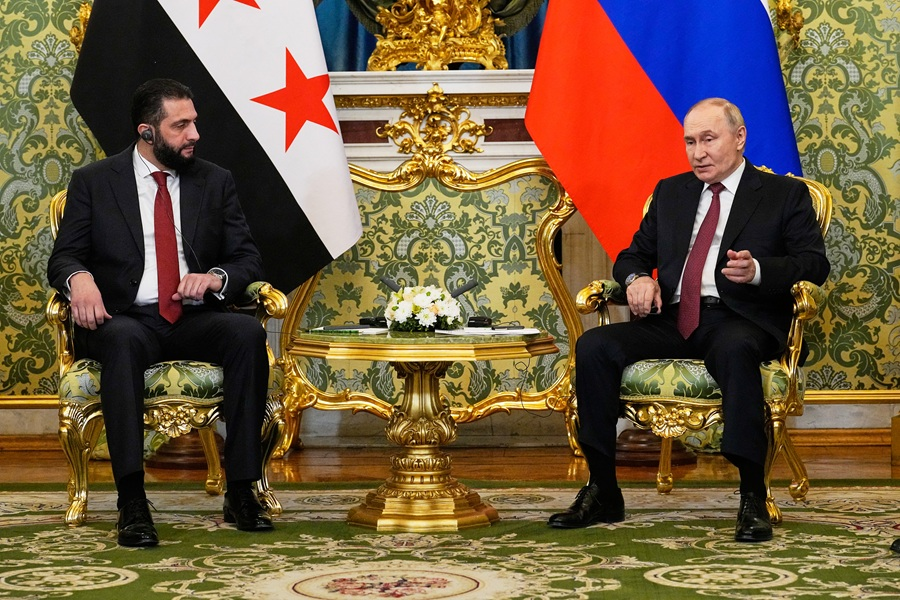
| Key Takeaways Despite the strain of the war in Ukraine and its confrontation with the West, Moscow has so far managed to maintain its core interests in Syria and is now positioning itself for a continued – albeit more limited – role in the country’s future, whether as a security guarantor or an investor in critical sectors such as energy and food security. Moscow’s main priorities in Syria include maintaining its military presence; safeguarding its assets and investments; addressing the status of its citizens who fought alongside terrorist organizations; preventing the handover of Bashar al-Assad to the new regime in Damascus; and refusing to pay compensation for damage caused by Russian military operations during the conflict. Although Russia has few levers over Syria, it retains important tools that it can use if Damascus significantly undermines Moscow’s interests. These include exerting pressure on minority rights; pursuing legal claims against Damascus to recover debts; and leveraging its position in the UN Security Council to act against President Ahmed al-Sharaa’s regime if necessary. Ties between Russia and the new Syrian administration face several challenges, particularly Western pressure on Sharaa to weaken Russian influence and the lingering legacy of Moscow’s cooperation with the Assad regime. However, most indicators suggest that relations are being reconfigured on the basis of mutual interest, with both sides demonstrating a notable degree of flexibility. |
Ex-Jihadist in Power: Syria One Year Later – A Façade of Normalcy Amidst Violence
| By Marc Vandepitte Global Research, December 10, 2025 |
| The Fall of a Dynasty On 8 December 2024, the Assad regime fell following an eleven-day offensive led by Hay’at Tahrir al-Sham (HTS), a former affiliate of Al-Qaeda in Syria. While the breakthrough seemed unexpected at the time, but in fact did not come completely out of the blue. It marked the culmination of a military turning point that had been maturing for some time to the detriment of the regime. What began in 2011 as peaceful protests during the Arab Spring quickly derailed into an armed conflict due to ruthless repression. Thirteen years later, Assad’s government was exhausted and weakened, while the opposition, supported from abroad, had recovered and evolved into a better-organized fighting force. Into that vacuum, a military coalition – led by the HTS entrenched in Idlib, coordinated with Turkey-backed groups, and with cover from Israel – was able to strike. On 8 December 2024, it captured key cities, pressured Damascus, and forced Assad to flee. |
President Sharaa and Turkiye: Complicated Relations and Tough Tests
| The Levant Studies Unit|27 Nov 2025 Key Takeaways While Syrian President Ahmed al-Sharaa is consolidating his domestic power, he faces the dilemma of managing relations with Turkiye. Without Ankara’s involvement, Damascus cannot achieve even minimal stability, rebuild the Syrian army or address the challenge posed by the Syrian Democratic Forces (SDF). Yet, leaning too heavily on Turkiye risks undermining Sharaa’s local, regional and international influence, potentially reducing him to a subordinate to Ankara. Turkiye is not necessarily comfortable with Sharaa’s attempts to balance his administration’s domestic and foreign policies. However, Ankara currently views him as a figure capable of consolidating a regime that is loyal – though not fully subordinate – to it in Syria, at least for now. In the foreseeable future, the relationship between Sharaa and Turkiye will likely remain susceptible to complications. At the same time, however, it will continue to be shaped by delicate cooperation and efforts to overcome differences. |
Syrian Parliamentary Elections: Process, Outcomes and Stakes
| The Levant Studies Unit|31 Oct 2025 Key Takeaways Syria conducted its first parliamentary elections following the fall of the Assad regime. A total of 119 seats were filled in the People’s Assembly, while 21 seats remained vacant in the governorates of Suwayda, Raqqa and Hasakah, which were excluded from the electoral process due to security conditions. The electoral process for the Syrian People’s Assembly was carefully designed to ensure controlled outcomes. Rather than a direct popular vote, it employed a hybrid model combining restricted elections within specific frameworks and direct appointments by President Sharaa, who has the power to fill 70 seats out of a total of 210. The elections reflected the desire of the new ruling regime to consolidate its legitimacy and project a positive image internationally, showcasing its capacity to pursue political and economic reforms. The newly formed assembly features a significant number of technocrats aligned with the regime’s orientations and policies, while excluding hardliners and advocates of extremist rhetoric. However, the process underscores the deep-rooted influence of traditional and tribal affiliations in Syria’s post-war landscape. |
Negotiations to Integrate the SDF into the Syrian Army: A Road to Peace or War?
| Syria Research Unit|24 Nov 2025 Key Takeaways Negotiations between the Syrian Democratic Forces (SDF) and the Syrian government are gaining momentum, largely due to pressure from the US administration. A negotiating and operational track has recently been established to bridge the gap between the two sides and accelerate the integration of military and civilian structures created by the Autonomous Administration of North and East Syria (AANES) into the Syrian state’s institutions and administrations. There are still no conclusive indicators that the integration of AANES into the Syrian state and army will succeed. Numerous obstacles remain, and the risk of renewed field escalation persists. There are parties on both sides who prefer confrontation and military victory over negotiations. Washington’s stand does not seem decisive regarding the integration of the SDF into the Syrian army. US policy appears more focused on managing crises and delaying difficult decisions than on pursuing durable solutions. Washington is trying to reconcile the two sides according to an unachievable formula: maintaining Syria’s unity without curbing Kurdish ambitions. Negotiations between Damascus and the Kurds are expected to extend beyond the deadline stipulated in the March 10 agreement. While limited clashes may occur in the near term, an all-out conflict appears unlikely in the foreseeable future. Read more |
President Sharaa and Turkiye: Complicated Relations and Tough Tests
| The Levant Studies Unit|27 Nov 2025 Key Takeaways While Syrian President Ahmed al-Sharaa is consolidating his domestic power, he faces the dilemma of managing relations with Turkiye. Without Ankara’s involvement, Damascus cannot achieve even minimal stability, rebuild the Syrian army or address the challenge posed by the Syrian Democratic Forces (SDF). Yet, leaning too heavily on Turkiye risks undermining Sharaa’s local, regional and international influence, potentially reducing him to a subordinate to Ankara. Turkiye is not necessarily comfortable with Sharaa’s attempts to balance his administration’s domestic and foreign policies. However, Ankara currently views him as a figure capable of consolidating a regime that is loyal – though not fully subordinate – to it in Syria, at least for now. In the foreseeable future, the relationship between Sharaa and Turkiye will likely remain susceptible to complications. At the same time, however, it will continue to be shaped by delicate cooperation and efforts to overcome differences. |
Syrian Parliamentary Elections: Process, Outcomes and Stakes

| Key Takeaways Syria conducted its first parliamentary elections following the fall of the Assad regime. A total of 119 seats were filled in the People’s Assembly, while 21 seats remained vacant in the governorates of Suwayda, Raqqa and Hasakah, which were excluded from the electoral process due to security conditions. The electoral process for the Syrian People’s Assembly was carefully designed to ensure controlled outcomes. Rather than a direct popular vote, it employed a hybrid model combining restricted elections within specific frameworks and direct appointments by President Sharaa, who has the power to fill 70 seats out of a total of 210. The elections reflected the desire of the new ruling regime to consolidate its legitimacy and project a positive image internationally, showcasing its capacity to pursue political and economic reforms. The newly formed assembly features a significant number of technocrats aligned with the regime’s orientations and policies, while excluding hardliners and advocates of extremist rhetoric. However, the process underscores the deep-rooted influence of traditional and tribal affiliations in Syria’s post-war landscape. |
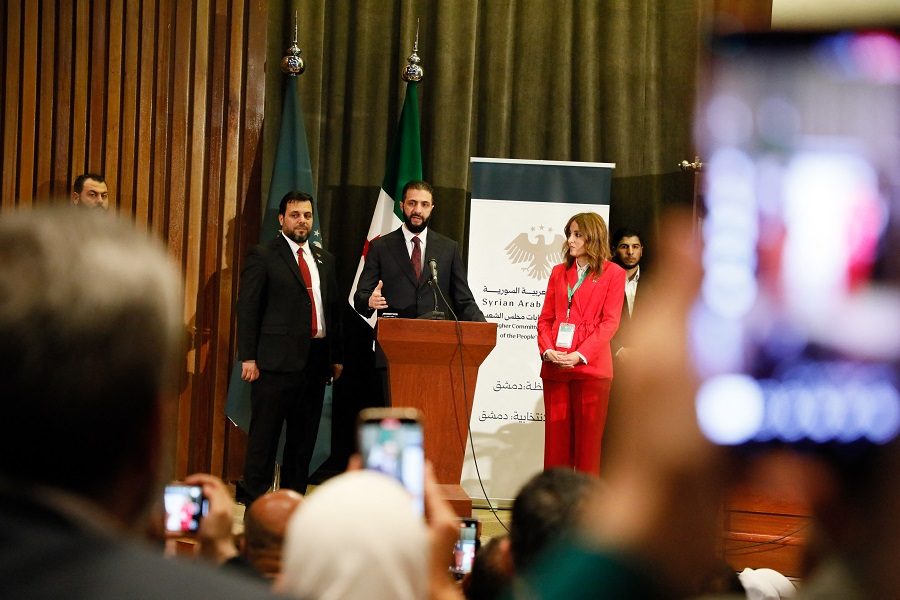
The Levant Studies Unit|31 Oct 2025
“Happy Terrorists” Join Hands. Al Qaeda “Bad Guys” Are Our Friends
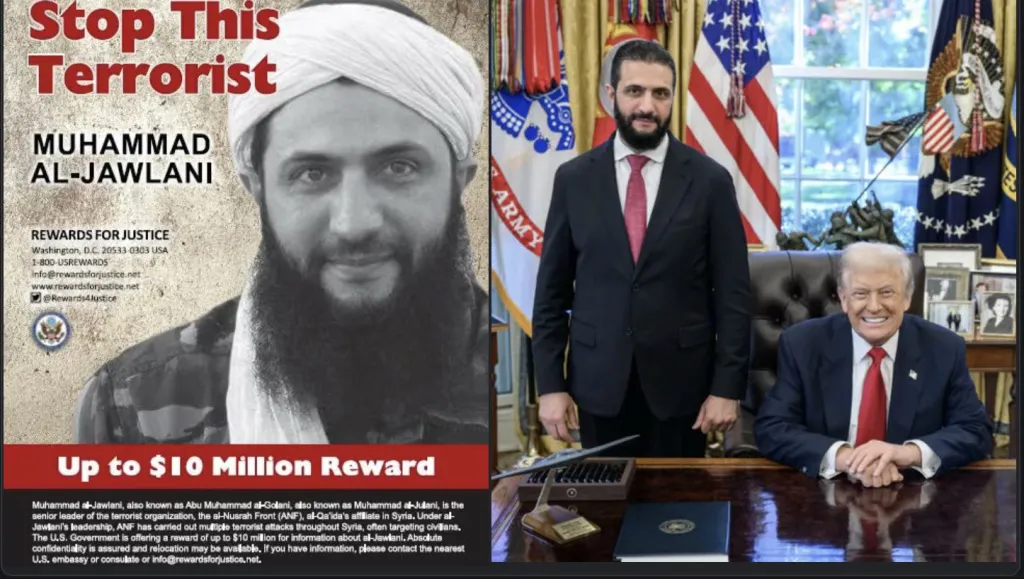
| Michel Chossudovsky Nov 14, 2025 This is no laughing matter. Here they are together, MAGA Donald Trump and former Al Qaeda leader Mohammad al-Jolani, smiling with a U.S. flag in the background. “Besides showering compliments, President Trump also backed the former terrorist and said he believes that the “young man” has a lot of promise. He has a “real shot at doing a good job“ in war-ravaged Syria, Said Mr Trump as he announced a reward for the new Syrian President and the people of Syria by “lifting all sanctions” which had been in place for nearly five decades (since 1979).” According to the US State Department, al-Jolani, prior to becoming President of Syria, was “the senior leader of the Al Nusra Front, an Al Qaeda affiliate in Syria” which was supported covertly by US-NATO, Saudi Arabia and the Turkish High Command. Jolani became President of Syria in March 2024. The decision to remove the “‘Stop This Terrorist’ up to $10 million reward” was carried out in December 2024 in the immediate wake of Trump’s victory in the November 2024 presidential elections. Continue reading |
From Jaramana to Suwayda: Domestic and Regional Ramifications of Escalation Between the New Syrian Authority and the Druze

EMIRATES| Key Takeaways The sectarian tension between the Druze and the Syrian interim authorities led by Ahmed al-Sharaa escalated into armed confrontations that lasted for days and took on regional dimensions, leading to mixed outcomes. Among the key developments: Sharaa has strengthened his hold over Damascus, secured the Damascus-Daraa road, enhanced security along the Damascus Airport Road and effectively confined the Druze issue to Suwayda governorate. Conversely, Sheikh Hikmat al-Hijri has consolidated his position as the leading Druze figure in Syria and deepened his rapprochement and openness toward Israel. The Druze question in Syria will remain a key issue on both the local and international stages. Domestically, it represents a major test for Sharaa’s ability to incorporate rebellious areas under his authority. Internationally, Suwayda is likely to remain central to the evolving dynamics of Syrian-Israeli relations. Sectarian tensions between the Druze community and the Syrian interim authorities led by Ahmed al-Sharaa escalated into violent confrontations lasting several days and acquiring regional dimensions. These confrontations spread across Druze-populated areas – including Jaramana, Sahnaya, Ashrafiyat Sahnaya and Suwayda – and also affected Druze university students. Israel intervened to prevent Sharaa from implementing his plan to disarm Druze factions, while Turkiye aligned with Damascus and issued military threats against Israel. Background and Context trigger for the escalation was a video clip The Druze cleric denied the video’s authenticity, Read the whole article protests by supporters of the new Syrian authorities in several cities – including Homs, Hamah, Idlib, Damascus and Aleppo On April 28, 2025, a faction affiliated with the Ministry of Defense deployed in the town of al-Malihah near Jaramana launched an unprovoked attack on positions of the public security forces in the city. Druze leaders in Jaramana condemned the assault. Sharaa’s rule, blamed „takfiri, terrorist gangs“ for the violence, holding the authorities responsible for the attack. |

Sheikh Hikmat al Hijri spiritual leader of Syrias Druze community has taken a firm stance against President Ahmad al Sharaas rule ShutterstockThe “Syrian Observatory for Human Rights” (SOHR) said that six individuals were executed on the outskirts of Sahnaya by “groups aligned with Defense Ministry forces.” These groups carried out extensive searches and arrested about 40 people. Violations also included personal insults to Druze fighters and their symbols after their arrest, such as forcibly shaving their moustaches.Israeli Intervention and Regional and International ReactionsI mplications of the Renewed Conflict with the DruzeConclusionsThe recent escalation between the new Syrian government and the Druze community has yielded mixed outcomes. Sharaa succeeded in consolidating his authority in the capital, securing control of the Damascus-Daraa highway (M5), tightening security around the Damascus-Airport road and geographically containing the Druze issue within Suwayda governorate. Meanwhile, al-Hijri emerged as the undisputed spiritual and political leader of the Druze in Syria, reinforcing his strategy of rapprochement with Israel. Moreover, the events demonstrated that Israeli declarations of support for Syria’s Druze community were not merely rhetorical, but reflected a serious and sustained commitment. In contrast, Turkiye and Saudi Arabia closely monitored the situation, ultimately playing key roles in de-escalating tensions and reinforcing Sharaa’s authority. The confrontation revealed early signs of an emerging international contest over Syria’s future, particularly between Turkiye and Israel. Ankara expanded its military reach toward Damascus and its surrounding areas, seeking to position itself as the actor capable of managing the military tempo and restraining Israeli actions. Simultaneously, Riyadh moved swiftly to contain the crisis by backing Jumblatt’s mediation efforts. In contrast, Israel sought to derail these regional arrangements by leveraging the Druze card, aiming to undermine Sharaa and destabilize his rule – part of a broader Israeli strategy to ensure Syria remains weak, divided and unable to reassert itself regionally. The Druze issue is likely to remain a pivotal matter both domestically and internationally. On the domestic front, it represents a critical test of Sharaa’s ability to reintegrate rebellious regions under central authority. With the dismantling of the Eighth Brigade in Daraa, extending the new regime’s influence into Suwayda becomes the next strategic objective. However, it remains uncertain whether Sharaa will opt for escalation – through security clampdowns, limited military operations or the use of local proxies such as Bedouin tribes in the east or certain Daraa-based factions in the west – or pursue a more calculated approach, seeking to contain local forces and gradually co-opt them through a strategy of incentives and pressure. Internationally, Suwayda is likely to remain a focal point in the evolving balance of power between Tel Aviv and Damascus. Israel is unlikely to relinquish its support for the Druze – first, to maintain leverage over Sharaa during any future indirect negotiations; second, in response to domestic pressure from the influential Druze community within Israel; and third, because of Suwayda’s strategic location in southern Syria. Israel views this area as a critical buffer zone and is determined to prevent it from falling under the control of hostile or extremist forces that could threaten its security or regional interests. |
US Empire Turns Syria Into Terrorist Hub

Canadian Internet Platform

| By Mark Taliano Global Research, June 11, 2025 Empire’s destruction of Syria serves to advance its imperial hegemony against additional prey countries using terrorist assets. Geopolitical analyst Brian Berletic recently noted, “As warned, the US is transforming Syria into a hub of terrorism to export violence across the Middle East (vs Iran and its allies), the rest of Eurasia (vs China & its Belt & Road projects), and beyond. US President Trump picks up where Obama-Biden left off, approving of plans to fold 1000s of extremists into Syria’s “army” under the nominal leadership of US proxy Al Jolani who heads the still-US-listed terrorist organization Al Nusra/HTS (Al Qaeda in Syria)… The open admission 1000s Uyghur extremists are fighting for Al Qaeda in Syria undermines US propaganda accusing China of “genocide” when in reality China was managing very real extremism and terrorism – US-approved extremism/terrorism.”(1) U.S Colonel Wilkinson, former Chief of Staff to former U.S Secretary of State Colin Powell, concurs with this assessment acknowledging that “the CIA would want to destabilize China, and that would be the best way to do it, to foment unrest and to join with those Uighurs in pushing the Han Chinese in Beijing from internal places rather than external.”(2) Empire’s strategic use of ISIS in Syria continues to serve Western-supported Zionist barbarism. A report by The Cradle indicates that Israel is cooperating with the ISIS-linked “Yasser Abu Shabab’ militia whose tasks include “preventing humanitarian aid from entering Gaza and fighting Hamas”.(3) Read the whole article |
.