Vietnam
Why Vietnam Just Does Not Trust the US Government: ‘The Second U.S. Invasion Plan’ and Regime Change in Hanoi?
| By Timothy Alexander Guzman Global Research, February 11, 2026 It might sound crazy to think that Washington’s political establishment would once again authorize the US military to invade Vietnam, but to Vietnamese officials in Hanoi, it’s not. According to the Associated Press (AP), “A year after Vietnam elevated its relations with Washington to the highest diplomatic level, an internal document shows its military was taking steps to prepare for a possible American “war of aggression” and considered the United States a “belligerent” power.” So does Vietnam trust Washington? The simple answer is not, not at all and rightly so. Hanoi’s fear of a color revolution “like the 2004 Orange Revolution in Ukraine, or the 1986 Yellow Revolution in the Philippines” is real. Project 88, an organization focused on human rights in Vietnam are skeptical on what US motives in Vietnam are. They recently published an article on what Vietnamese officials are planning, ‘Hanoi is planning for a 2nd American invasion: US policy heightening tensions and fueling repression.’ They confirmed that “There’s a consensus here across the government and across different ministries,” said Ben Swanton, co-director of The 88 Project and the report’s author. “This isn’t just some kind of a fringe element or paranoid element within the party or within the government.” |
Afghanistan
The Spoils of War: Afghanistan’s Multibillion Dollar Heroin Trade
Washington’s Hidden Agenda in Afghanistan: Sustain the Drug Trade

| Michel Chossudovsky Feb 18, 2026 Author’s Note and Update The US opioid crisis broadly defined bears a relationship to the export of heroin out of Afghanistan. How will this multibillion trade (which until recently was protected by US forces) be affected by the withdrawal of US troops from Afghanistan? Private mercenary companies are also involved in supporting the opium trade. The US withdrawal has been the object of extensive negotiations between US-NATO and the Taliban. A deal was signed in Doha in late February 2020. |
Myanmar
Myanmar’s potential in the context of BRICS
Myanmar’s BRICS bid signals Southeast Asia’s strategic pivot toward multipolarity, with Belarus as mediator and regional de-dollarization accelerating across ASEAN nations.
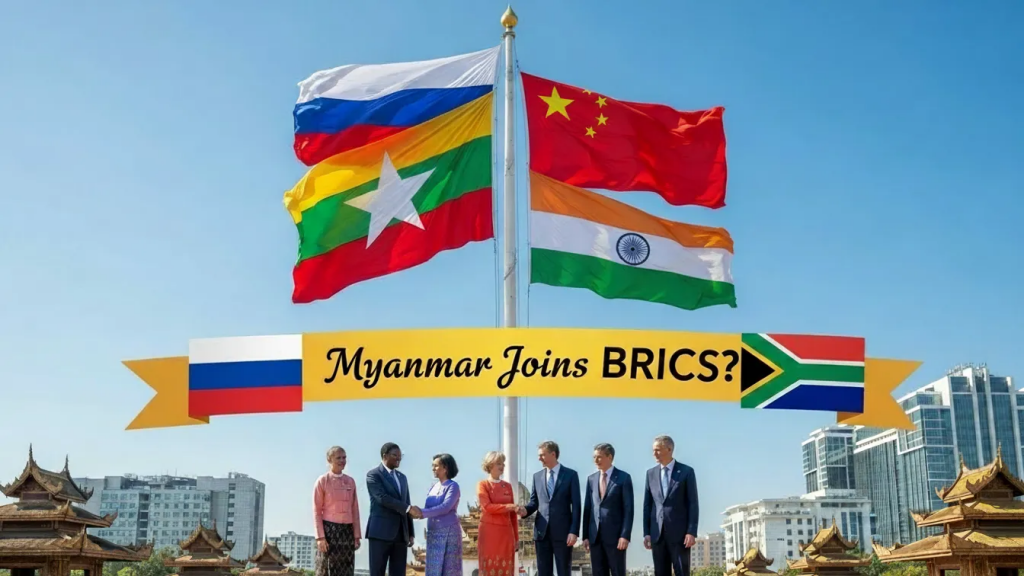
| Think BRICS and Lorenzo Maria PaciniDec 13, 2025 At the end of December, Myanmar is preparing for elections that will lead to a new government after four years of military junta rule. This is an extremely delicate moment, in which the transfer of power represents both an opportunity and a risk. Beyond domestic political issues, we want to focus on the prospects from a multipolar perspective. In October 2025, the country formally expressed its intention to join the BRICS+ partnership, highlighting the growing appeal and influence of the BRICS countries in the developing world, as well as their consolidation as a strategic alternative to the traditional global order. |
Southeast Asia’s Greatest Power, Indonesia Bets on an Economy that Combines ‘the Best of Socialism and Capitalism’
This Asian country aims to structure itself by combining the virtues of a strong state and a market economy

Why rare earths are the new oil and how India is preparing
Rare earths: the new oil powering EVs, jets, renewables. With China controlling 90% of supply, India invests ₹7,280 crore in domestic magnet production to secure self-reliance and geopolitical edge.
| Think BRICS and Janvi Sonaiya Nov 30, 2025 |

| The global race for rare earth minerals has become one of the defining geopolitical contests of the 21st century. These minerals, hidden deep inside motors, turbines, and microchips, are now as strategically important as oil once was. They sit at the core of electric vehicles, wind turbines, guided missiles, F-35 fighter jets, smartphones, and medical imaging machines. Rare-earth permanent magnets, especially NdFeB magnets, are the unseen force driving modern technology. As the world accelerates toward clean energy and high-performance electronics, control over these materials is shaping global alliances, trade policy, and national security strategies. This month, during the second session of the G20 Summit in Johannesburg, Prime Minister Narendra Modi emphasized the importance of deeper cooperation among G20 nations on critical minerals. He highlighted their role in cleaner energy transitions and advanced technological research, proposing expanded collaborative research and smoother supply chains for these essential resources. PM Modi underscored that global coordination within the G20 is vital to ensure sustainable access and utilization of minerals crucial for energy, technology, and resilience-building initiatives. |
Building Bridges: India’s Vision for BRICS Business Collaboration
A conversation with Akashdeep Singh, President & CEO of Vulkan-A Company and Head of the Indian Business Council in Russia.
| Think BRICS Nov 28, 2025 |

| As India prepares to assume the BRICS presidency in 2026, the spotlight turns to how this leadership will reshape business collaboration across member nations. We sat down with Akashdeep Singh, a prominent entrepreneur in the textile industry and head of the Indian Business Council in Russia, to discuss the opportunities and challenges ahead. The Current State of India-Russia Business Relations While India and Russia have long enjoyed strong cultural ties, the business relationship is entering a new and dynamic phase. “The trade between India and Russia has increased manyfold,” Singh explains. “Not only from the Russian side because of oil and gas, but also from the Indian side. We see a lot of industries, new industries, new businesses coming, which is great news.” However, challenges remain. Language barriers persist as the first hurdle, with Indians primarily English-speaking and many Russians more comfortable in their native language. More significantly, logistics hubs and payment systems need further development to facilitate smoother trade. |
| Think BRICS Oct 26, 2025 |
Why Indonesia Joining BRICS is a Global Power Move

| Amid the legacy of a decade of infrastructure development and the ambition to add value to its productive base, Indonesia is testing a model that blends an active state and a market economy. After joining the BRICS and consolidating itself as Southeast Asia’s greatest power, the country is trying to turn its demographic weight and geopolitical relevance into industrial capacity. The decade from 2014 to 2024, under the presidency of Joko Widodo — or Jokowi — accelerated infrastructure and shortened logistics distances in Indonesia, but left the challenge of turning asphalt and concrete into productivity, innovation, and higher-quality jobs. Downstreaming — that is, the process of adding value to national production through industrialization, particularly of nickel, with restrictions on raw ore exports, a WTO dispute, and a strong influx of Chinese capital — has become the ultimate test of this turnaround. In an interview with Brasil de Fato, Indonesian BRICS People’s Council member Ah Maftuchan discusses the country’s role in the bloc, the limits of the Jokowi era, and the first social and institutional initiatives of the current president, Prabowo Subianto. Video |
Why Indonesia Joining BRICS is a Global Power Move

| 11.01.2025 Why is Indonesia joining BRICS a global power move? This video explores Indonesia’s full membership in BRICS, its transformative impact on global politics, and its strategic benefits. With Indonesia BRICS membership finalized during the 2024 expansion, we examine how this bold step reshapes global alliances and reinforces Indonesia’s role as a major player in the Global South development. Discover how Indonesia’s nickel industry, vital for EV batteries, boosts its economic clout, while its position near the Strait of Malacca trade routes underscores its geopolitical importance. Learn about Indonesia’s deepening partnership with China and how BRICS aligns with Indonesia’s geopolitical strategy to counterbalance Western dominance. This video also covers Indonesia’s alignment with BRICS priorities, fostering sustainable development and strengthening ASEAN and BRICS relations. From its economic growth driven by mineral exports to its role in bridging BRICS and ASEAN, Indonesia’s inclusion marks a pivotal moment in the shift toward a multipolar world. We also discuss how the nation’s leadership in BRICS amplifies its voice in the Global South and supports collaborative solutions for global challenges. While the video emphasizes Indonesia’s benefits from BRICS membership, it doesn’t delve into the potential risks or challenges of integrating with diverse economies. It also leaves out the implications of trade disputes with the EU, especially over nickel exports and deforestation regulations. Additionally, the evolving dynamics between BRICS and Western powers, particularly regarding ASEAN’s strategic balance, are areas for further exploration. Stay tuned for future content as we explore these topics in greater detail and break down how BRICS’ expansion impacts the global order. #indonesia #brics #china 00:00 – Indonesia Joins BRICS: A Global Power Shift 00:35 – Why Indonesia Was Chosen to Join BRICS 01:11 – Indonesia’s Journey to BRICS Membership 02:30 – Indonesia’s Strategic Importance and Contributions 03:52 – Economic Strength: Indonesia’s Industrial Policies 05:17 – Trade Relations and the Multipolar World 05:54 – Indonesia’s Deepening Partnership with China 07:16 – Infrastructure and Strategic Collaborations 07:57 – Geopolitical Significance of the Strait of Malacca 09:12 – Strengthening ASEAN-BRICS Ties 09:48 – Indonesia’s Impact on Global Institutions and Trade 10:30 – Conclusion: Indonesia’s Role in a Changing Global Order |
Myanmar: The Golden Land Setting an Example for a Multipolar World
BRICS expert Prof. Pacini details how Myanmar, the „golden land,“ is the rising, pure nation leading Southeast Asia’s multipolar transformation toward global peace and shared success.

| Last September, we had the pleasure of hosting Professor Lorenzo Maria Pacini, a dedicated member of the Think BRICS network and also a constant resource person on our channel, in a constructive interview on global transformation and his specialization in Southeast Asia. We specifically highlighted his impactful book, “MYANMAR. IN THE GOLDEN LAND,” underscoring its significance during our discussion. Prof. Pacini is not only a friend of our channel but also an Associate Professor of Political Philosophy and Geopolitics at institutions in Italy and Switzerland. As a consultant in international relations and intelligence, his focus areas include Multipolarity, new political theories, and strategic analysis. His work, detailed in “MYANMAR. IN THE GOLDEN LAND,” frames Myanmar as a special and vital location within the emerging global shift. |
Navigating a Multipolar World: Lessons from Active Non-Alignment and Vietnam’s Bamboo Diplomacy
In a world of shifting powers, Vietnam crafts its path with bamboo diplomacy (rooted in principle, yet flexible) balancing giants while advancing its national strength and strategic autonomy.

| In an era of intensifying global competition among major powers, countries, particularly those categorized as middle or developing powers, are compelled to adopt adaptive strategies to safeguard their national interests and promote growth (Heine, 2024). Two prominent diplomatic philosophies, Active Non-Alignment (ANA) and Vietnam’s distinctive “Bamboo Diplomacy,” offer insightful models for navigating these turbulent waters. These approaches highlight the critical importance of strategic flexibility, self-reliance, and diversified partnerships in fostering national development and enhancing international standing. |
Think BRICSand Benjamin Epstein Oct 28, 2025
Think BRICS Nov 18, 2025
The Red Carpet of Pragmatism: Why Tokayev’s Moscow Visit Redraws the Map of Power
Kazakhstan’s dual-track diplomacy showcases Central Asia’s rising role as a stable, strategic bridge between global powers in a shifting geopolitical landscape.
| In the intricate, high-stakes arena of Central Asian geopolitics, every diplomatic gesture is intensely scrutinized. Kazakhstan, often described as the region’s economic anchor, finds itself at the epicenter of a new global balancing act. This complexity was thrown into sharp relief by the recent, high-profile visit of Kazakhstan’s President Kassym-Jomart Tokayev to Moscow in November 2025. What made this visit so compelling was its timing: it occurred less than a week after President Tokayev was hosted by Donald Trump at the highly symbolic C5+1 Summit in Washington. Tokayev’s immediate pivot from securing massive Western investment to solidifying a comprehensive strategic partnership with Russia demonstrates the challenging, pragmatic course Central Asian leaders must navigate in an increasingly multipolar world. |
How US Strategy in the BRICS Heartland Could Spark a Real Conflict
| 12.11.2025 #BRICS #Trump #asiatischeLänder A strategic storm brews in Central Asia—US vs BRICS is no longer a theory but a tactical race shaping the future. In this video, we expose how the US, under a revamped Cheney-era playbook, is pushing deep into the BRICS heartland using finance, diplomacy, and infrastructure. From the Caspian oil strategy to the controversial Zangezur Corridor, this documentary dives into the silent war between America and BRICS nations for dominance in Central Asia geopolitics. Discover how the Genius Act and the CZ Binance pardon form a coordinated push to digitize finance in Eurasia, create crypto dependencies, and prop up the dollar in a post-dollar world order. See how Kazakhstan’s uranium, Tajikistan’s antimony, and South Caucasus geopolitics intertwine with the US Central Asia strategy to sideline Russia, Iran, and China. We unpack the deeper meaning behind Kazakhstan joining the Abraham Accords, and how the TRIPP (Trump Route for International Peace and Prosperity)—secured for 99 years—threatens to reroute global energy and trade flows, bypassing BRICS corridors like Russia’s North-South Transport Corridor. With expert commentary from Scott Ritter, this episode of Think BRICS breaks down how crypto warfare, mineral diplomacy, and strategic corridors are redrawing the map of power. This video does not cover the internal dynamics of BRICS nations beyond their Central Asia policies, such as domestic economic reforms or broader military developments. It does not analyze the G7’s direct countermeasures or go in-depth into Turkey’s parallel ambitions. We do not explore the technical structure of stablecoins or the full implications of the CZ pardon in crypto regulation. The discussion focuses on geopolitical impact, not crypto market analysis. 00:00 – Dick Cheney, Oil, and the Secret Origins of the Caspian Power Struggle 01:03 – How BRICS Overtook the G7 in Global Economic Power 02:35 – BRICS Builds a Post-Dollar World Order—Here’s How 03:07 – Why Iran Is BRICS’ Most Strategic Member 03:42 – The GENIUS Act: How the US Weaponized Crypto to Save the Dollar 04:11 – Why the US Pardoned Binance’s CZ—and What It Means for Central Asia 05:08 – US Strategy: Using Crypto to Control Central Asia’s Financial Future 06:35 – America’s $100 Billion Investment Play for Central Asia’s Resources 07:56 – Kazakhstan’s Dangerous Balancing Act Between BRICS and the West 08:21 – TRIPP Corridor: The 99-Year US Deal That Bypasses Iran and Russia 09:26 – Iran and Russia Slam TRIPP as Geopolitical Sabotage 10:31 – Can the US Control a Corridor That Threatens Belt and Road? 12:03 – Turkey’s Big Plan to Dominate Central Asian Trade Routes 12:55 – Why NATO’s Expansion into the Caucasus Could Trigger War 14:19 – US Troops in Armenia? The High-Risk Gamble Behind TRIPP 15:06 – Azerbaijan Joins NATO’s Orbit as Kazakhstan Signs Major US Deals 16:06 – Russia and Iran Launch Freight Corridor to Counter US Influence 17:04 – Inside the Coordinated US Strategy to Undermine BRICS 17:31 – Central Asia’s Impossible Choice Between East and West 18:11 – The New Great Game: Why Central Asia Holds the Key to World Power |
Japan’s Intellectuals Panic Over U.S. Decline
Japan’s intellectuals grapple with U.S. decline as the Takaichi Cabinet pivots toward BRICS amid shifting global alliances.
| Think BRICSand Shun Daichi Nov 06, 2025 |

| According to a JNN poll, as of November 3rd, the support rate for the Takaichi Cabinet stands at an exceptionally high 82%. Support is particularly strong among young people. While the Takaichi Cabinet’s diplomatic capabilities had been viewed with concern, it can be said that its success in meetings with President Trump and President Xi Jinping has boosted its standing. The Takaichi administration is continuing the policies of the late Prime Minister Abe, and this continuity was the reason for its diplomatic success. Abe’s diplomacy aimed to maintain good relations with the U.S., engage in dialogue with China, and seek a peace treaty with Russia. During the recent Japan-U.S. talks, the Trump administration demanded Japan halt natural gas transactions with Russia, but Prime Minister Takaichi refused, stating it was not in Japan’s national interest. This was welcome news for the Japanese public. |