The Strategic Nexus: How BRICS is Redefining Africa’s Multipolar Future

The BRICS-Africa alliance is bridging a $170B infrastructure gap and redefining global geopolitics through financial sovereignty and the transformative vision of Agenda 2063.

| Think BRICS and Benjamin Epstein Feb 23, 2026 In 1884, the Berlin Conference saw European powers carve up the African continent without a single African representative present. Fast forward to February 2026, and the scene at the African Union (AU) Headquarters in Addis Ababa—a city 7,700 feet above sea level and the only African capital never to be colonized—presents a starkly different reality. Today, Africa is no longer a passive recipient of global decisions; it is becoming a co-author of a brand-new multipolar global order. At the heart of this transformation is the deepening engagement between Africa and the BRICS+ alliance, a partnership that promises to bridge the continent’s massive infrastructure gaps while asserting its financial sovereignty. The geopolitical significance of BRICS expansion into Africa, exemplified by Ethiopia’s recent accession, marks a shift from “political liberation” to “economic integration”. This transition is framed by the AU’s Agenda 2063, a blueprint designed to transform Africa into a global powerhouse. By aligning with BRICS, African nations are moving away from the traditional Western-led “shock theory” and aid-dependence toward a model based on South-South cooperation and trade-based partnerships. |
Zimbabwe’s BRICS Trade Dividend: How 25% More Intra-Bloc Commerce Could Accelerate African Growth

Zimbabwe eyes 6.5% GDP surge & 16% exports via BRICS ties. Benjamin Epstein’s research reveals paths out of commodity trap.
| Think BRICS and Benjamin Epstein Feb 15, 2026 Zimbabwe could boost its real GDP growth from 5.0% to 6.5% and double its export growth rate by deepening economic ties with BRICS nations, according to new research by economist Benjamin Epstein. Epstein, a speaker and analyst at the Think BRICS channel, examines Zimbabwe’s 2026 economic outlook through the lens of BRICS integration in his paper “The BRICS 25% Trade Dividend? Zimbabwe’s Prospective Growth and Potential Impact of BRICS Economic Linkages.” His research builds on the 14th BRICS Trade Ministers Meeting in Moscow, which set a target of increasing intra-bloc trade share by 25%. Epstein takes that directive and models what it means for a specific African economy navigating between cyclical recovery and structural transformation. |
Africa Isn’t a Single Story: Why Investment Success Depends on a Nuanced Approach
| Unlock Africa’s potential with nuanced investments: Navigate its 54 diverse economies, embrace complexity, and discover overlooked opportunities for sustainable growth and impact-driven returns. |
The Problem: Conventional Investment Frameworks Misread Africa
| Global investors continue to grapple with a fundamental challenge: how to deploy capital effectively in Africa. The continent is often described in sweeping generalisations – yet behind the headlines are over a billion people, millions of unique stories, and a tapestry of rich cultures, histories, and economies that defy simplistic categorisation. While Africa presents some of the most compelling long-term investment opportunities, the frameworks used to assess these opportunities are often outdated or misapplied. Too many investors rely on a one-size-fits-all approach, viewing Africa as a single, homogeneous market. In reality, it is a complex ecosystem of 54 distinct economies, each with its own regulatory environment, capital needs, and growth drivers. Investing in Africa without understanding its depth and nuance is like trying to read a novel by scanning only the chapter titles. The real opportunities lie in the details – in the informal markets powering local economies, in the shifting consumer landscapes, and in the diverse financial ecosystems that underpin growth across the continent. This oversimplification doesn’t just distort perceptions, it leads to missed opportunities, mispriced risk, and capital deployment strategies that fail to capture the full potential of African markets. The continent’s investment landscape cannot be understood through broad strokes or standardised models. It demands a more sophisticated, locally grounded, and sector-specific approach, one that acknowledges the intricacies of each market, the interplay of formal and informal economies, and the real drivers of long-term value creation. |
The Nuance: What Really Drives Commercial Outcomes in Africa?
| Africa’s diversity extends beyond national borders, influencing everything from consumer behaviour to regulatory frameworks and financial markets. However, for institutional investors, this complexity presents a distinct challenge, as many of the standard risk assessment tools employed in other global markets fail to capture the full depth and nuance of African economies. |

| Traditional financial metrics often provide an incomplete picture. While macroeconomic indicators such as GDP growth and sovereign credit ratings offer useful benchmarks, they tend to overlook the extensive informal economy that underpins a significant share of business activity. As explored in GG Alcock’s Kasinomics, the informal sector contributes between 40% and 60% of GDP in several sub-Saharan African countries. In Nigeria, for example, estimates suggest that as much as 85% of employment occurs outside the formal sector. Overlooking these dynamics can lead to a fundamental misreading of economic potential and business risk. An understanding of sector-specific and country-specific factors is equally important. Success in African markets rarely hinges on broad regional trends alone. In the infrastructure sector, regulatory fragmentation and political risk often create barriers to capital deployment, requiring long-term financing structures and strong partnerships with local stakeholders. Financial services present a similar duality. Although formal banking penetration remains relatively low, with only around 43% of adults in sub-Saharan Africa holding a formal bank account, fintech adoption is progressing at pace. In Kenya, for instance, nearly 80% of adults use mobile money services, driving innovation and presenting opportunities that traditional banking models frequently fail to accommodate. In agriculture, performance depends not only on commodity prices but also on the ability to navigate fragmented supply chains, local market conditions, and infrastructure challenges. Financing structures must also adapt to local realities. Many investors struggle to structure capital effectively because they rely on conventional equity and debt instruments alone. In practice, blended finance, which combines concessional capital with private equity and debt, often offers a more appropriate and resilient framework. These models are better suited to mitigating risk, unlocking sustainable returns, and aligning with the diverse conditions found across African markets. A more nuanced approach to investment is essential, one that aligns capital structures with on-the-ground realities, and links corporate strategies to well-defined opportunities. Market participants who recognise and embrace this connection will be better positioned to facilitate transactions that reflect both the operational needs of businesses and the risk-adjusted returns sought by investors. |
The opportunity: Why Africa’s complexity is an advantage, not a challenge
| Africa’s complexity is not a barrier to investment – it is the very foundation of its economic potential. While some institutional investors view fragmented markets, regulatory diversity, and informal economies as risks to be mitigated, those who structure capital with an appreciation for these dynamics gain access to high-value opportunities that are often overlooked in conventional investment models. The key is recognising that Africa’s markets are not static or one-dimensional. They are evolving rapidly, with shifting trade flows, emerging financial ecosystems, and capital needs that differ by sector and geography. Africa’s economic transformation is unlocking new avenues for capital deployment. The implementation of the African Continental Free Trade Area (AfCFTA) is expected to re-shape trade patterns across the continent. The AfCFTA is projected to boost intra-African trade by over 50% by 2035, unlocking new growth corridors, particularly in manufacturing and logistics, driving demand for industrial capacity, logistics infrastructure, and cross-border financial solutions. Investors who anticipate and structure capital around these shifts will be best positioned to capture value. |
Rwanda: Installing a US Protectorate in Central Africa. The US Was Behind the Rwandan Genocide
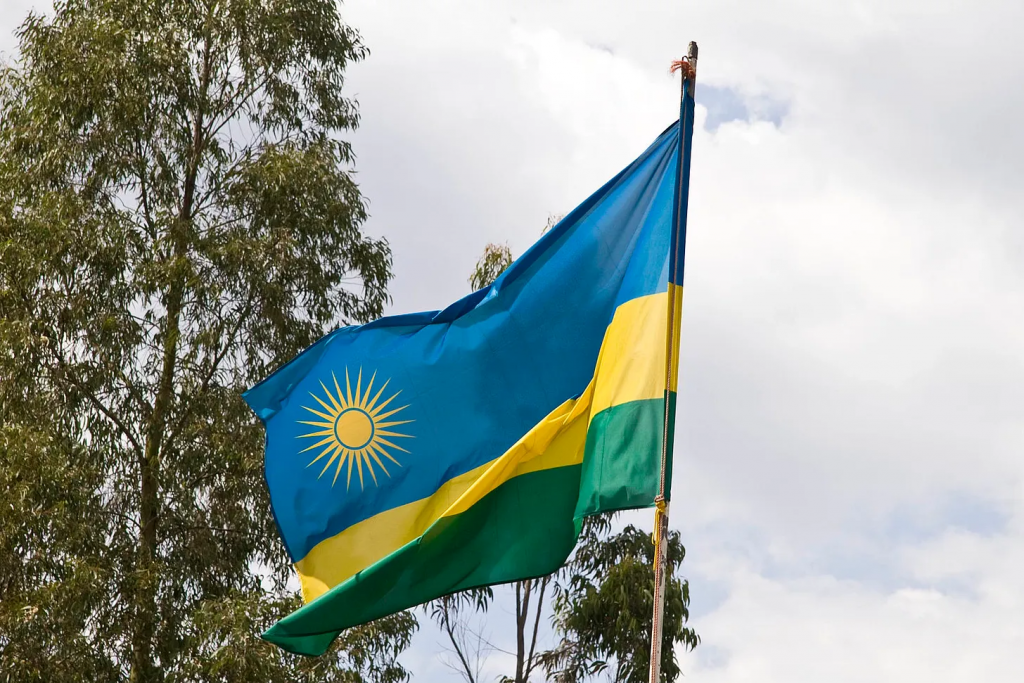
| Michel Chossudovsky Dec 12, 2025 Part B: Installing a U.S. Protectorate in Central Africa By Michel Chossudovsky From the outset of the Rwandan civil war in 1990, Washington’s hidden agenda consisted in establishing an American sphere of influence in a region historically dominated by France and Belgium. America’s design was to displace France by supporting the Rwandan Patriotic Front and by arming and equipping its military arm, the Rwandan Patriotic Army (RPA) |
30,000 Civilians Killed in Sudan by Israeli-UAE Backed Militias in 72 Hours
„It’s an absolute horror show,“ says United Nations aid chief.
| CJ Werleman Nov 25, 2025 |

| Published by CJ Werleman Independent, a crowdfunded and independent journalism project that seeks to expose and end injustices against Muslims around the world. Please SUPPORT his fight against injustice and the Islamophobia Industry by clicking HERE. Nearly 30,000 people have been slaughtered during the past three days in the Sudanese city of El Fasher, which has been under siege from UAE-backed RSF militias for the past 550 days. The governor of Darfur, Mr. Minni Arkou Minnawi, told reporters that 27,000 people were killed in the first three days after RSF militias captured El-Fasher in late October. The city has been transformed into a “crime scene” and an “absolute horror show”, says Tom Fletcher, the United Nations’ top humanitarian aid chief. The horror is captured on social media, satellite images, and eyewitness reports – all of which paint a picture of carnage, cruelty, and unrestrained savagery. “We saw so many bodies that we lost count,” one survivor told the Observer. |